The Future of Drone Technology
Created on 20 December, 2025 • Tech Blog • 251 views • 12 minutes read
The future of drones in 2026: total autonomy, 2-hour flight times, urban air taxis, and AI-driven swarms transforming global logistics and industry.
The Future of Drone Technology
Table of Contents
- The Paradigm Shift: From Remote Control to Total Autonomy
- Solid-State and Hydrogen: Breaking the Battery Bottleneck
- BVLOS and the Expansion of Global Airspace Boundaries
- Urban Air Mobility: The 2026 Commercial Launch of eVTOLs
- Generative AI and Predictive Intelligence in Industrial Drones
- The Proliferation of Drone Swarms: Collaboration Over Individualism
- Last-Mile Logistics: Overcoming the Final Urban Barrier
- Sustainability and the Rise of Solar-Powered High-Altitude Drones
- Security and Regulation: Remote ID and the UTM Framework
- Conclusion: Integrating the Sky into the Global Economic Fabric
The Paradigm Shift: From Remote Control to Total Autonomy
As we approach the beginning of 2026, the drone industry is undergoing its most significant transformation since the invention of the quadcopter. We are moving away from the "pilot-centric" model that defined the last decade and into an era of total autonomy. In this new landscape, the drone is no longer a device that is "flown" by a human; rather, it is a robotic agent that is "tasked" with an objective. This shift is powered by "Physical AI," a branch of artificial intelligence that allows machines to perceive, reason, and act within three-dimensional space in real-time. By integrating onboard supercomputing platforms, drones can now navigate complex, unstructured environments—such as dense forests or damaged industrial facilities—without a GPS signal or human intervention. The future of drone technology is defined by this move toward "zero-pilot" operations, where the role of the human shifts from a flight controller to a system orchestrator who simply defines the mission parameters.
The impact of this autonomy cannot be overstated, as it removes the single greatest bottleneck to scaling drone operations: human labor. In 2025, we saw the first widespread deployments of "Drone-in-a-Box" (DiaB) systems, where fully autonomous drones reside in weatherproof docking stations, launching automatically to perform routine inspections or security patrols before returning to charge. This 24/7 operational capability is transforming sectors like energy and infrastructure, where the goal is no longer to "inspect" an asset but to "continuously monitor" it. As these autonomous systems become more predictive, they will begin to anticipate failures before they occur, using real-time data to identify the subtle signs of structural fatigue or equipment malfunction. The future sky will be managed by intelligent networks that coordinate thousands of flights simultaneously, creating a seamless layer of aerial intelligence that supports every facet of modern life.
Solid-State and Hydrogen: Breaking the Battery Bottleneck
For years, the primary limitation of drone technology has been the energy density of lithium-ion batteries, which typically restrict flight times to under 30 minutes. However, late 2025 has marked a turning point with the commercial deployment of next-generation power sources. Solid-state batteries have finally entered the industrial drone market, offering up to double the energy density of traditional packs with significantly improved safety and faster charging times. By replacing liquid electrolytes with solid ones, these batteries eliminate the risk of thermal runaway, allowing drones to fly for over an hour on a single charge without adding significant weight. This increase in "time-on-station" is a game-changer for search-and-rescue teams and delivery services, who can now cover twice the distance in a single mission.
In addition to solid-state technology, hydrogen fuel cells are emerging as the preferred solution for long-range industrial applications. In late 2025, we have seen the successful launch of drones that can fly for four to six hours by converting compressed hydrogen into electricity. This capability is essential for large-scale pipeline inspections, maritime surveillance, and border security, where drones must cover hundreds of kilometers in a single sortie. Furthermore, the development of "Ultra-Fast Charging" (UFC) stations—capable of providing 30 minutes of flight time with just five minutes of charging—is minimizing the downtime of autonomous fleets. As these energy technologies continue to mature throughout 2026, the "battery anxiety" that once limited the scope of drone projects will become a thing of the past, enabling a new class of ultra-long-endurance aerial robots.
BVLOS and the Expansion of Global Airspace Boundaries
The true potential of drone technology has long been held back by the requirement for a human pilot to maintain a "Visual Line of Sight" (VLOS) with the aircraft. In 2026, this barrier is being systematically dismantled through the implementation of "Beyond Visual Line of Sight" (BVLOS) regulations. This regulatory shift allows drones to fly tens or even hundreds of kilometers away from their operator, provided they are equipped with advanced "Detect and Avoid" (DAA) systems. These systems utilize a combination of radar, LiDAR, and AI-powered vision to identify other aircraft and obstacles, ensuring that drones can share the sky safely with manned aviation. The move to routine BVLOS operations is the "unlock" that turns drones from localized tools into a global infrastructure layer.
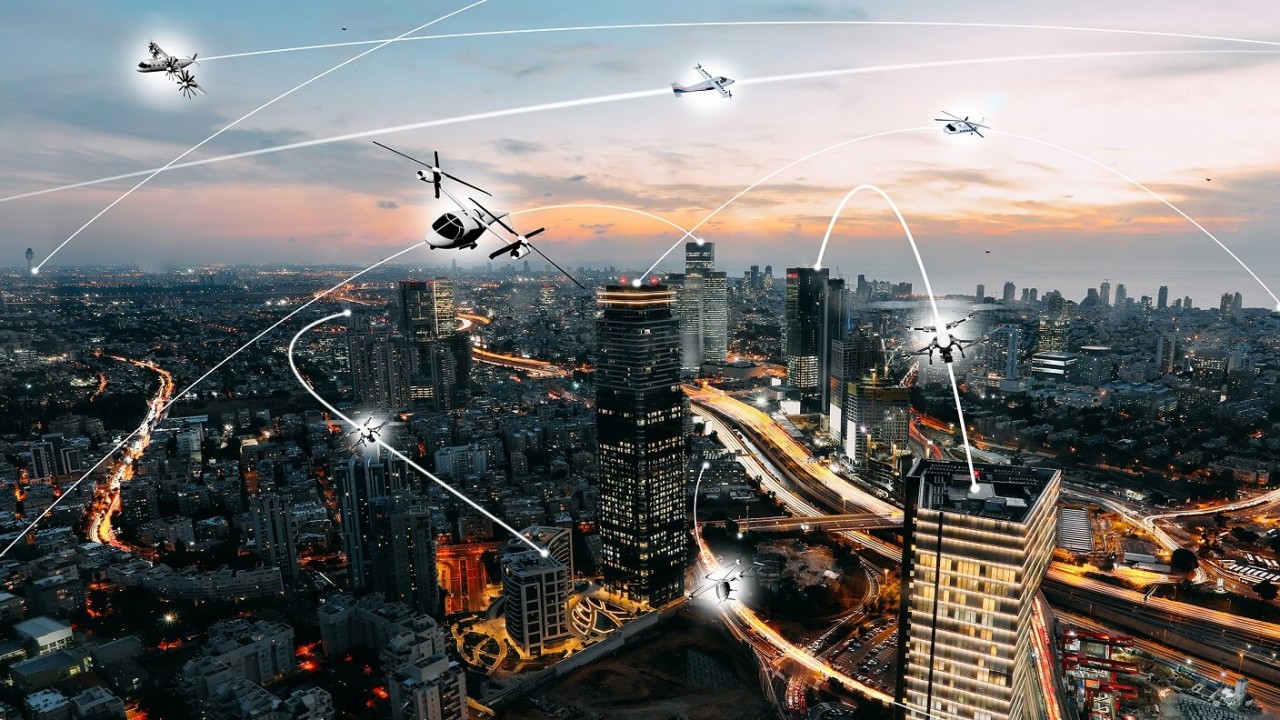
This expansion is supported by the rollout of Unmanned Traffic Management (UTM) frameworks across major economic zones. UTM acts as an automated air traffic control system for drones, managing flight plans, ensuring deconfliction, and enforcing "no-fly" zones in real-time. By 2026, many countries will have established dedicated "drone corridors"—low-altitude highways specifically designed for autonomous aerial transport. This organized approach to the sky allows for a massive increase in flight density, enabling thousands of delivery, inspection, and emergency drones to operate in the same city without the risk of collision. The transition to BVLOS is not just a technical upgrade; it is a fundamental redesign of how we utilize the third dimension, turning the empty space above our heads into a productive and highly regulated economic asset.
Urban Air Mobility: The 2026 Commercial Launch of eVTOLs
While small drones are transforming logistics, a larger class of aircraft known as electric Vertical Take-Off and Landing (eVTOL) vehicles is set to redefine urban transportation. 2026 is projected to be the year of the commercial launch for "air taxi" services in major global hubs like Dubai, Abu Dhabi, and New York. These vehicles combine the vertical agility of a helicopter with the efficiency and low noise profile of a fixed-wing electric aircraft. Unlike traditional helicopters, which are loud and expensive to maintain, eVTOLs are designed to be a mass-market solution for bypassing urban congestion. Major players like Joby Aviation, Archer, and EHang have successfully completed thousands of test flights and are now moving into the final stages of certification and "vertiport" construction.
The appeal of Urban Air Mobility (UAM) lies in its ability to turn a 60-minute cross-city commute into a 10-minute aerial transit. In the initial phase, these flights will likely be piloted by humans to ensure public trust, but the ultimate goal is full autonomy. The integration of eVTOLs into the broader public transport network is a key focus for smart city planners in 2026, with the creation of "mobility hubs" that connect aerial taxis with subways and high-speed rail. This creates a multi-layered transport system that can adapt to real-time demand, reducing the pressure on aging ground infrastructure. As the cost of these services falls through economies of scale and automation, the "flying car" will transition from a science-fiction trope to a practical reality for millions of urban residents.
Generative AI and Predictive Intelligence in Industrial Drones
The integration of Generative AI into drone platforms is fundamentally changing how industrial data is processed and understood. In 2025, drones have moved beyond simple image capture to "contextual understanding." This means a drone inspecting a wind turbine doesn't just take a photo of a crack; it understands the history of that specific asset, compares the current damage to previous years, and uses generative models to predict how that crack will grow over the next six months. This "Predictive Risk Intelligence" allows companies to shift from reactive maintenance—fixing things after they break—to proactive maintenance, which saves billions of dollars in downtime and prevents catastrophic failures.
Furthermore, Natural Language Processing (NLP) is making drone technology accessible to non-experts. In 2026, an operations manager can simply "talk" to their drone fleet, asking questions like, "Show me the status of the solar panels in the northeast sector," or "Is there any unauthorized activity near the perimeter fence?" The AI translates these voice commands into flight paths and data queries, executing the mission and providing a summarized report in seconds. This level of "human-AI teaming" ensures that the insights gathered by drones are immediately actionable, bridging the gap between raw aerial data and executive decision-making. The drone is no longer just a "eye in the sky"; it is an intelligent consultant that provides a deep, data-driven understanding of the physical world.
The Proliferation of Drone Swarms: Collaboration Over Individualism
One of the most visually stunning and technologically complex trends for 2026 is the rise of drone swarms. Swarm technology allows hundreds or even thousands of small drones to operate as a single, coordinated entity, mimicking the collective behavior of birds or insects. In the commercial sector, swarms are being used for "mass-mapping," where a dozen drones can map a construction site or an agricultural field in a fraction of the time it would take a single large aircraft. These swarms use mesh networking to share information in real-time; if one drone finds an area of interest, it can signal the rest of the swarm to adjust their focus and gather more detail.
Beyond mapping, swarms are finding applications in large-scale entertainment and search-and-rescue. "Drone light shows" have already begun to replace traditional fireworks due to their sustainability and precision, but the 2026 generation of swarms will be capable of much more complex, dynamic 3D storytelling in the night sky. In emergency response, a swarm can be deployed over a disaster zone to create a temporary communication network, find survivors using thermal sensors, and deliver small medical supplies simultaneously. The "swarm" is effectively a modular super-machine, where the loss of a few units does not jeopardize the overall mission. This resilience and scalability make swarm intelligence one of the most important frontiers in the future of autonomous systems.
Last-Mile Logistics: Overcoming the Final Urban Barrier
Last-mile delivery remains the most expensive and inefficient part of the global supply chain, but 2026 is the year when drone logistics finally scale to meet urban demand. Advancements in automated loading systems and "smart lockers" have created a frictionless path from the warehouse to the consumer's doorstep. Drones are now capable of carrying payloads of up to 10 kilograms, covering the vast majority of e-commerce orders, including groceries, electronics, and medical supplies. By bypassing street-level traffic, drones can achieve "instant delivery" (under 15 minutes) while reducing the carbon footprint of the logistics industry by up to 80 percent compared to traditional delivery vans.
The success of urban drone delivery is also tied to the development of "noise-shaping" technology. Public acceptance has long been a concern due to the high-pitched whine of drone propellers, but the latest models entering the market in late 2025 utilize "toroidal" propellers and bio-mimetic wing designs that significantly reduce noise pollution. This ensures that a neighborhood with hundreds of daily drone deliveries remains quiet and livable. Additionally, the integration of "parcel-dropping" mechanisms and winch systems allows drones to deliver packages to balconies or designated safe-zones without ever coming into contact with people. As consumers grow accustomed to the speed and convenience of aerial delivery, the drone will become as common a sight in our residential areas as the mail carrier's truck is today.
Sustainability and the Rise of Solar-Powered High-Altitude Drones
As the world focuses on the "Green Transition," drone technology is emerging as a critical ally in sustainability. In late 2025, the market for solar-powered drones is experiencing a period of hyper-growth. These aircraft, often referred to as High-Altitude Platform Stations (HAPS), use lightweight photovoltaic cells embedded in their wings to stay aloft for weeks or even months at a time. Operating in the stratosphere, these drones act as "pseudo-satellites," providing low-cost internet connectivity to remote areas, monitoring wildfire risks in real-time, and tracking illegal logging in rainforests. Because they are powered by the sun, they have virtually zero operational emissions and a fraction of the cost of launching a traditional satellite.
Closer to the ground, the entire drone ecosystem is moving toward a "circular" model. Manufacturers are increasingly using bio-based composites and recycled carbon fiber for drone frames, while "battery-as-a-service" models ensure that lithium and other critical minerals are properly recycled at the end of their lifecycle. Drones are also enabling "regenerative agriculture" by allowing for the precise application of organic fertilizers and the monitoring of soil carbon sequestration. By providing the data needed to optimize resources and the technology to replace carbon-intensive ground transport, drones are proving to be an essential tool for building a more sustainable and resilient global economy. The future of the sky is not just autonomous; it is green.
Security and Regulation: Remote ID and the UTM Framework
As the number of drones in the sky increases, so does the need for robust security and identification systems. Starting in early 2026, "Remote ID" has become a mandatory requirement for all commercial drones in most major jurisdictions. This "digital license plate" allows law enforcement and airspace managers to identify a drone's owner and location in real-time, ensuring accountability and deterring illegal activity. This transparency is the foundation of public trust, as it ensures that "rogue" drones can be quickly identified and neutralized. Simultaneously, the development of counter-UAS (Unmanned Aircraft Systems) technology has become a multi-billion dollar industry, protecting critical infrastructure like airports and power plants from unauthorized aerial incursions.
The integration of drones into the national airspace is also being managed through the evolution of standardized regulatory frameworks. In 2026, we are seeing the finalization of "Part 108" in the United States and similar rules in the EU, which provide a clear legal path for large-scale commercial operations. These rules move away from "one-off" waivers and toward a "type-certified" model, where a drone that meets specific safety standards can be flown anywhere in the country. This regulatory clarity is driving a massive influx of enterprise investment, as companies can finally plan for long-term drone programs with confidence. By balancing innovation with safety and privacy, regulators are ensuring that the drone industry can grow sustainably without compromising the security of our communities.
Conclusion: Integrating the Sky into the Global Economic Fabric
In conclusion, the future of drone technology is not just about the aircraft themselves, but about the total integration of the sky into the fabric of the global economy. By 2026, we have moved past the "experimental" phase and into a period of massive, scaled deployment. The convergence of Physical AI, next-generation energy density, and automated air traffic management has created a world where aerial intelligence is a utility—as reliable and essential as electricity or the internet. Drones are no longer just tools for specific niches; they are the connective tissue that links our physical surroundings with the digital world, providing the speed, data, and efficiency needed to solve the most pressing challenges of the 21st century.
As we look forward, the possibilities are limited only by our imagination. From the autonomous air taxis that will eliminate traffic jams to the tiny drone swarms that will revolutionize medical surgery, the aerial revolution is just beginning. The most successful organizations and nations will be those that embrace this new dimension, building the infrastructure and the talent needed to navigate a three-dimensional world. The journey from "remote control" to "intelligent autonomy" is complete, and the sky is officially open for business. As we move further into the 2020s, the drone will stand as the ultimate symbol of a more connected, efficient, and sustainable human future, marking a new chapter in our relationship with the world above.
References
Drones Market 2026-2036: Technologies and Opportunities (IDTechEx) |
Drone Industry Trends 2026: What's Shaping the Future (DroneU) |
Drones and Urban Last-Mile Delivery in 2026 (Coptrz)
Popular posts
-
How Robotics Will Transform FactoriesTech Blog • 419 views
-
Future Smartphones: What’s Coming NextTech Blog • 417 views
-
How AI Is Transforming Business in 2025Tech Blog • 397 views
-
Future of Online SecurityTech Blog • 383 views
-
How Data Privacy Is EvolvingTech Blog • 369 views