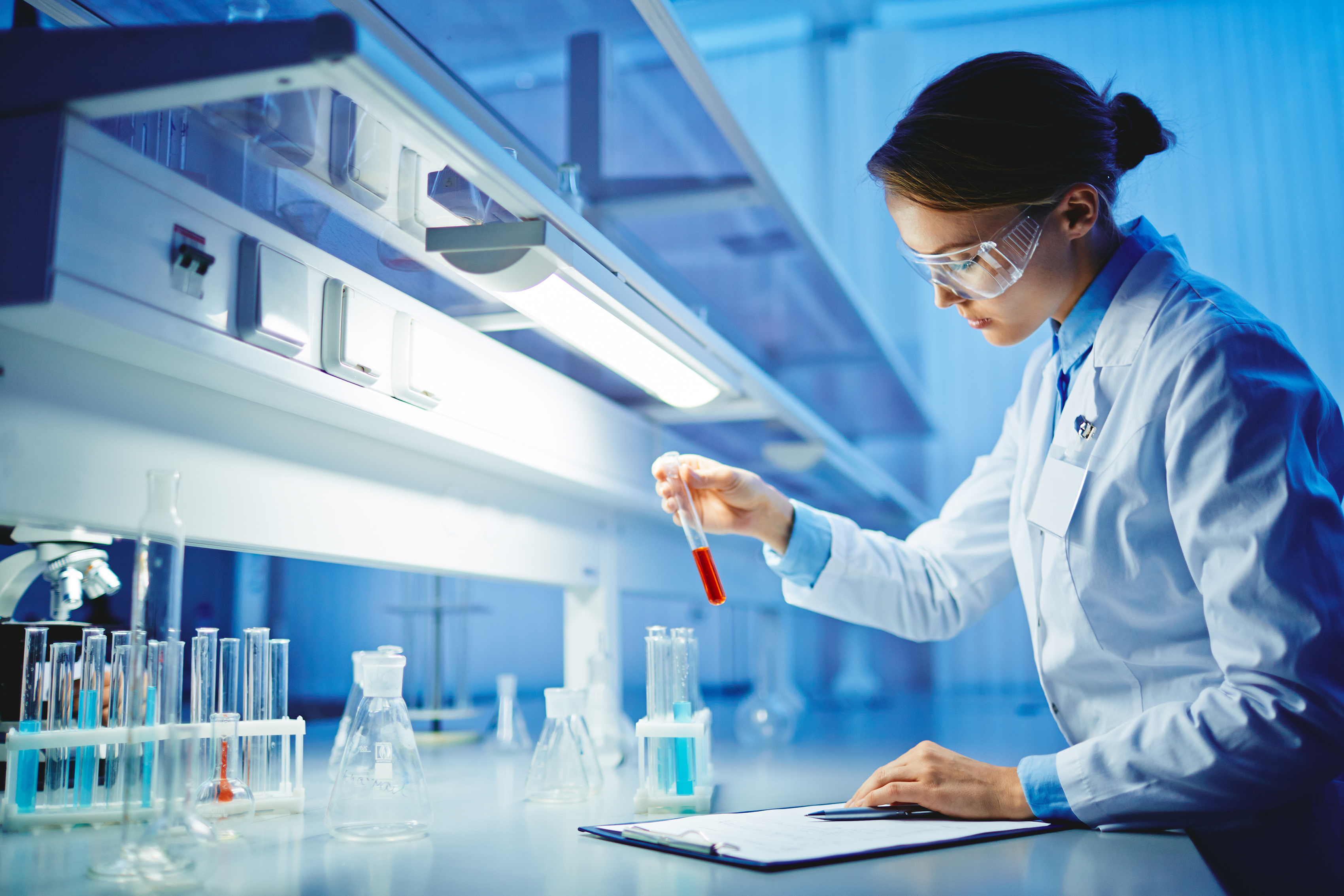
The Future of Biotech Engineering
Created on 1 January, 2026 • Tech Blog • 389 views • 9 minutes read
Explore the future of biotech engineering in 2026: From AI-native drug discovery and in vivo CRISPR to synthetic biology and biological digital twins.
The Future of Biotech Engineering: Navigating the Convergence of AI and Life Sciences in 2026
Table of Contents
- The Great Convergence: Biology as Information Technology
- AI-Native Drug Discovery: Moving from Trial to Simulation
- In Vivo CRISPR: Gene Editing Without Surgery
- Synthetic Biology 2.0: Programming Living Factories
- Precision Medicine: The Rise of Digital Twins and Multi-Omics
- Regenerative Medicine: Lab-Grown Tissues and 3D Bioprinting
- Sustainable Biomanufacturing: The Green Biotech Frontier
- Neural Interfaces and the Bio-Digital Bridge
- The Ethics of Programmable Life: Governance in the 2020s
- Conclusion: Engineering a Resilient Biological Future
The Great Convergence: Biology as Information Technology
As we navigate through the opening weeks of 2026, the field of biotechnology has undergone a fundamental identity shift. We have moved past the era of "Biotechnology as Chemistry" into the era of "Biotechnology as Information." In this new paradigm, DNA is viewed as the ultimate code, cells as the hardware, and proteins as the executing software. This shift has been accelerated by the total integration of Artificial Intelligence into every stage of the biological engineering pipeline. No longer is biotech confined to slow, manual pipetting; it is now an automated, data-driven discipline that operates at the speed of silicon.
By 2026, the "Bio-Revolution" is projected to impact up to 60 percent of the physical inputs to the global economy. The engineering principles of modularity, standard parts, and predictability—once reserved for mechanical and software engineering—are now being applied to living systems. This allows for the rapid design of organisms that can produce specialty chemicals, capture carbon, or act as living sensors. The future of biotech engineering is not just about curing diseases; it is about rewriting the very foundations of how we manufacture, consume, and interact with the natural world.
AI-Native Drug Discovery: Moving from Trial to Simulation
In 2026, the traditional 10-year, multi-billion-dollar drug development cycle is being dismantled by AI-Native Drug Discovery. In the past, scientists relied on high-throughput screening—physically testing thousands of molecules to see if one might work. Today, generative AI models like AlphaFold 3 and its successors allow researchers to simulate molecular interactions with near-perfect accuracy. These "In Silico" trials enable engineers to design custom proteins and small molecules that fit into disease targets like a key into a lock, long before a single wet-lab experiment is conducted.
This "Generative Biology" approach is saving billions in R&D costs and, more importantly, years of time. By late 2025, the first AI-designed drugs for complex neurological conditions and rare cancers entered Phase II clinical trials with a 40 percent higher success rate than traditional candidates. In 2026, "Automated Biofoundries"—robotic labs that run 24/7 without human intervention—are executing these AI-generated blueprints, synthesizing and testing molecules in real-time. The bottleneck is no longer human labor or intuition, but the availability of high-quality biological data and computational power.
In Vivo CRISPR: Gene Editing Without Surgery
The CRISPR revolution has reached its most significant milestone in 2026: In Vivo Gene Editing. While the first wave of CRISPR therapies involved removing a patient's cells, editing them in a lab, and re-injecting them (Ex Vivo), the new frontier happens entirely inside the body. Using advanced lipid nanoparticle (LNP) delivery systems—the same tech that powered mRNA vaccines—biotech engineers can now deliver the CRISPR "molecular scissors" directly to the liver, heart, or lungs via a simple injection.
This "Gene Editing Without Surgery" is transforming the treatment of genetic disorders like Sickle Cell Disease, Cystic Fibrosis, and Transthyretin Amyloidosis. In 2026, we are also seeing the rise of Base and Prime Editing, which allows for single-letter DNA corrections without making double-strand breaks in the genome. This significantly increases the safety profile of these therapies, reducing the risk of unintended mutations. As we move further into 2026, CRISPR is evolving from a specialized tool for rare diseases into a broad therapeutic platform capable of addressing common conditions like high cholesterol and cardiovascular disease through "preventative editing."
Synthetic Biology 2.0: Programming Living Factories
Synthetic Biology (SynBio) in 2026 has moved beyond simple genetic modification into Whole-Genome Engineering. Engineers are no longer just "editing" life; they are "designing" it from the ground up using standardized biological parts. This has led to the creation of "Living Factories"—engineered microbes and yeast that can ferment sugar into everything from sustainable aviation fuel (SAF) to spider silk and lab-grown dairy proteins. These systems are significantly more efficient than traditional agriculture or chemical manufacturing, requiring a fraction of the land and water.
The key breakthrough in 2026 is "Genetic Circuitry." By building logical gates (IF-THEN-ELSE) into a cell's DNA, engineers can create "Smart Microbes" that only activate in specific conditions. For example, soil bacteria can be programmed to release nitrogen fertilizer only when they detect a specific signal from a plant's roots, or a therapeutic probiotic can be designed to release an anti-inflammatory drug only when it detects a flare-up in a patient's gut. SynBio is turning biology into a programmable substrate, allowing us to build a more sustainable and responsive industrial base.
Precision Medicine: The Rise of Digital Twins and Multi-Omics
In 2026, the "one-size-fits-all" model of medicine is officially obsolete. Precision Medicine is now driven by "Multi-Omics"—the simultaneous analysis of a patient's genome, proteome, and microbiome. This massive dataset is used to create a "Biological Digital Twin"—a computational model of a patient's unique physiology. Before a doctor prescribes a treatment, they can "test" it on the digital twin to predict how the patient will respond, effectively eliminating the trial-and-error approach to healthcare.
This hyper-personalization is particularly transformative in oncology. In late 2025, clinical centers began using "Tumor-on-a-Chip" technology—where a patient's own cancer cells are grown in a microfluidic device—to screen for the most effective drug combination in real-time. By 2026, this data is integrated with wearable sensor data and lifestyle factors, allowing for a "Continuous Care" model. Your digital twin is updated every time you eat, sleep, or exercise, providing a predictive health score that can alert you to a potential illness weeks before a physical symptom appears. The future of biotech is a move from "treating the sick" to "maintaining the healthy."
Regenerative Medicine: Lab-Grown Tissues and 3D Bioprinting
The shortage of organ donors is being addressed in 2026 through the maturation of 3D Bioprinting and Xenotransplantation. Biotech engineers can now "print" complex tissue structures, such as skin grafts, corneas, and heart valves, using "bio-inks" made of a patient's own stem cells. These lab-grown tissues are biocompatible and carry no risk of rejection. While fully functional, lab-grown hearts and kidneys are still a few years away from widespread use, the first clinical trials for "Bio-Printed Liver Patches" to treat end-stage liver disease began in early 2026.
Simultaneously, the use of "Humanized Animals"—specifically pigs whose organs have been genetically modified using CRISPR to be compatible with humans—is providing an "off-the-shelf" solution for urgent transplants. These "Genetically Engineered Organ Scaffolds" represent a hybrid approach to regenerative medicine. In 2026, the focus has shifted toward Organ-on-a-Chip systems for drug testing, which are replacing animal testing in many pharmaceutical laboratories. We are building the tools to repair the human body with the same modularity with which we repair a machine.
Sustainable Biomanufacturing: The Green Biotech Frontier
The environmental impact of traditional manufacturing is being mitigated by Sustainable Biomanufacturing. In 2026, biotech is the driving force behind the circular economy. We are seeing the rise of "Carbon-Eating Bacteria" that have been engineered to consume CO2 directly from industrial flue gas and convert it into bioplastics or animal feed. This turns a greenhouse gas into a valuable feedstock, effectively "closing the loop" on carbon emissions. Biomanufacturing facilities are also moving toward "Continuous Fermentation," which reduces energy use by 30 percent compared to traditional batch processing.
In the textile and fashion industries, 2026 is the year of "Bio-Fabrication." Leather grown from mycelium (mushroom roots) and dyes produced by engineered bacteria have moved from luxury boutiques to mainstream retail. These materials are not just "sustainable alternatives"; they are often superior in performance—lighter, stronger, and entirely biodegradable. By 2026, the "Bio-Economy" is no longer a niche market; it is a competitive necessity for any company looking to meet the strict carbon-neutral mandates of the late 2020s. We are learning to make everything we need without destroying the environment that sustains us.
Neural Interfaces and the Bio-Digital Bridge
One of the most provocative frontiers of biotech engineering in 2026 is the development of Neural Interfaces and Bio-Electronic Medicines. We have moved beyond external wearables into the era of "Deep Integration." Neuralink and its competitors have successfully moved their brain-computer interfaces (BCIs) into clinical trials for restoring mobility to paralyzed patients and sight to the blind. These devices use high-density electrode arrays to "read" neural signals and translate them into digital commands, bridging the gap between biological thought and digital action.
Beyond BCIs, we are seeing the rise of "Electroceuticals"—tiny, implantable devices that wrap around nerves to treat chronic diseases like rheumatoid arthritis and Crohn's disease by modulating electrical signals. Instead of a pill, the patient receives a precise "pulse" that regulates their immune response. In 2026, biotech engineers are working to create "Biological Computing"—using DNA and proteins to store data and perform logic within the body. This represents the ultimate convergence of biology and technology, where the line between "natural" and "artificial" begins to disappear.
The Ethics of Programmable Life: Governance in the 2020s
As our power to engineer life grows, so do the ethical complexities. In 2026, the global community is grappling with the implications of "Human Enhancement" and "Germline Editing." While the focus remains on curing disease, the technology also opens the door to modifying traits like muscle density or cognitive performance. This has led to the formation of the Global Bio-Governance Council, tasked with creating binding international standards to prevent a "Genetic Divide" between those who can afford enhancements and those who cannot.
Privacy is another critical concern in the era of Multi-Omics. If your biological digital twin can predict your future health, who owns that data? In 2026, new "Genetic Privacy Laws" ensure that insurance companies and employers cannot use genomic data to discriminate. Furthermore, the security of our biological infrastructure—"Biosecurity"—has become a national priority. As we create more powerful and autonomous biological agents, we must ensure they are "Safe-by-Design," with built-in "kill switches" to prevent unintended environmental spread. The future of biotech requires not just scientific innovation, but moral and legal wisdom.
Conclusion: Engineering a Resilient Biological Future
In conclusion, the future of biotech engineering in 2026 is defined by the seamless integration of artificial intelligence, genomic precision, and industrial-scale sustainability. We have transitioned from being "observers" of biological processes to being "architects" of the living world. The tools we have developed—AI-native drug discovery, in vivo CRISPR, and synthetic living factories—are providing the solutions to the most pressing challenges of our time, from aging and disease to climate change and resource scarcity.
As we look toward the remainder of the 2020s, the "Bio-Digital" world will continue to expand. The smartest biotech engineers will be those who can navigate the intersection of multiple disciplines, combining the rigor of engineering with the complexity of life. While the ethical and security challenges are significant, the potential for a healthier, more sustainable, and more resilient future is unprecedented. We are no longer limited by what nature provides; we are only limited by our imagination and our commitment to using these powerful tools for the benefit of all humanity. The era of programmable life has truly begun.
References
2026 Biotech Outlook: 10 Breakthrough Trends (Atlantis Bioscience) |
Trends Shaping the Life Sciences Landscape in 2026 (Insight Global) |
Biotech Trends for 2026: The Digital and AI Revolution (Bioscience Today)
Popular posts
-
How Robotics Will Transform FactoriesTech Blog • 508 views
-
Future Smartphones: What’s Coming NextTech Blog • 492 views
-
How AI Is Transforming Business in 2025Tech Blog • 480 views
-
Future of Online SecurityTech Blog • 453 views
-
Best Coding Languages for 2025Tech Blog • 449 views