Predictive Analytics Explained
Created on 14 January, 2026 • Tech Blog • 362 views • 12 minutes read
What is predictive analytics? Explore the 2026 guide to how machine learning, quantum-enhanced data, and proactive modeling are transforming retail, healthcare, and global finance.
The Oracle in the Machine: Predictive Analytics Explained for 2026
Table of Contents
The Evolution of Foresight: Beyond Descriptive Statistics
The Engine of Prediction: How Machine Learning Processes the Future
Data Orchestration and the Role of Quantum-Enhanced Inputs
Predictive Analytics in Retail: Hyper-Personalization at Scale
Financial Markets and the Algorithmic Crystal Ball
Healthcare and the Rise of Proactive Life-Saving Models
Supply Chain Resilience: Navigating Global Complexity
Ethical Bias and the Challenge of Deterministic Algorithms
The Human Element: Interpreting Probability in Decision Making
Conclusion: Designing a World Without Surprises
The Evolution of Foresight: Beyond Descriptive Statistics
As we navigate the technological landscape of 2026, the ability to anticipate future events is no longer a matter of intuition or simple trend-following. Predictive analytics has emerged as the defining tool of the modern era, transforming how businesses, governments, and individuals interact with the unknown. In the early days of data science, organizations relied heavily on descriptive statistics—a method of looking backward to understand what happened. While useful, this historical perspective offered little guidance for navigating the rapid shifts of a globalized economy. Predictive analytics represents a fundamental shift in this dynamic by moving from "what happened" to "what is likely to happen next." By identifying patterns in historical data and applying sophisticated mathematical models, we can now assign probabilities to future outcomes with unprecedented accuracy.
The transition to predictive modeling has been accelerated by the sheer volume of data generated by our interconnected world. Every transaction, sensor reading, and social interaction contributes to a vast digital tapestry that predictive models use to learn and adapt. In 2026, this technology has become ubiquitous, embedded in everything from the smartphones in our pockets to the global logistics networks that move our goods. This is not just about forecasting; it is about creating a proactive environment where decisions are made before a crisis occurs or an opportunity vanishes. We have moved into an age of "anticipatory intelligence," where the goal is to reduce the friction of uncertainty and build a more stable, efficient reality for all.
The Engine of Prediction: How Machine Learning Processes the Future
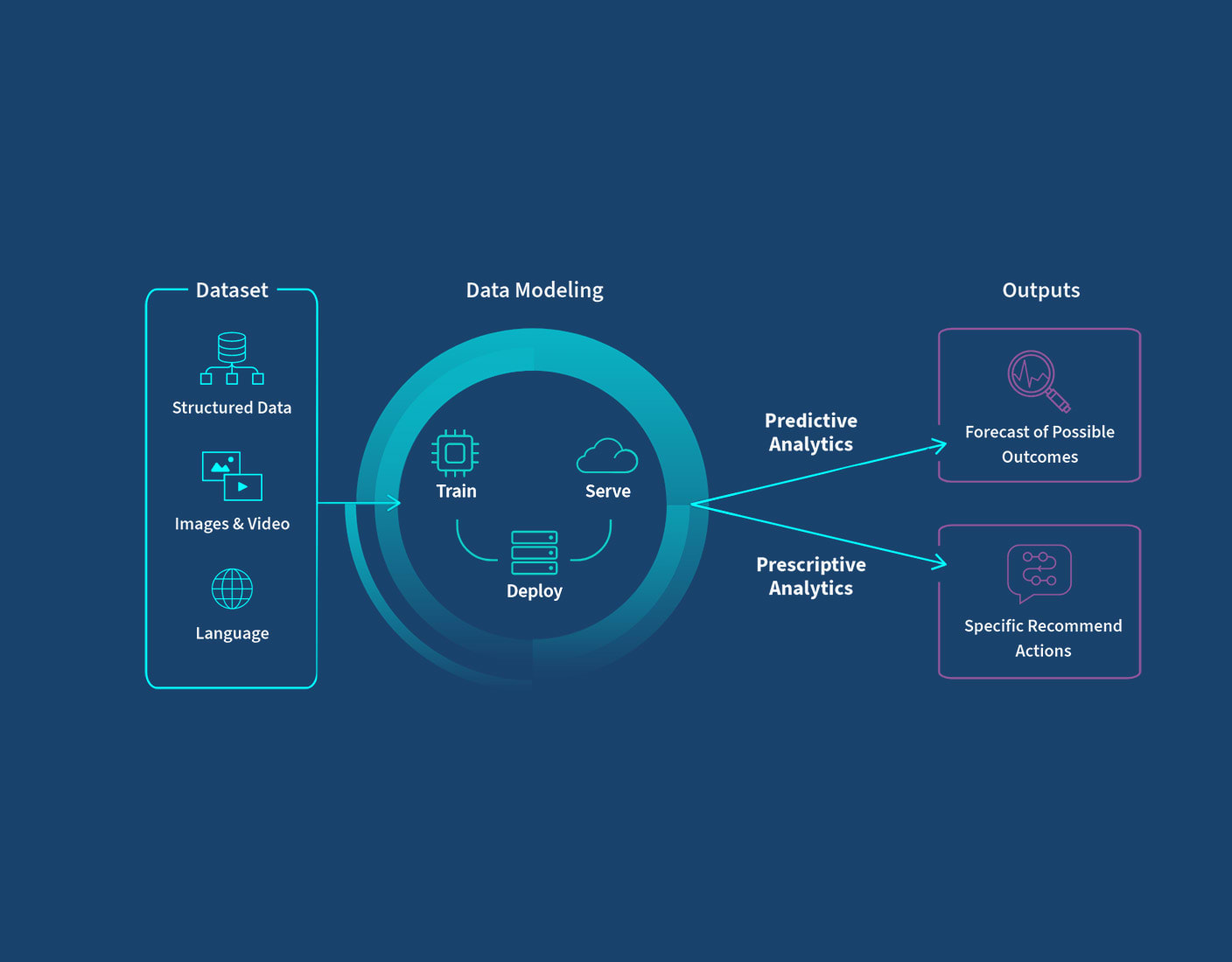
At the heart of predictive analytics lies the complex engine of machine learning. Unlike traditional software that follows a fixed set of rules, machine learning algorithms are designed to evolve as they consume more data. In 2026, the standard for predictive modeling involves deep neural networks that can analyze non-linear relationships across thousands of variables simultaneously. These models function by building a "feature set"—a collection of measurable properties that influence a specific outcome. By weight-adjusting these features based on historical success and failure, the algorithm develops a refined understanding of the underlying causality within a dataset. This allows the machine to spot subtle correlations that would be completely invisible to a human analyst.
The sophistication of these engines has reached a point where they can now handle "unstructured" data with ease. In the past, predictive models required neatly organized spreadsheets to function. Today, they can ingest live video feeds, natural language documents, and satellite imagery to inform their predictions. This holistic approach to data processing ensures that the model is not operating in a vacuum but is grounded in the messy, multi-dimensional reality of the world. As these engines become more powerful, the focus in 2026 has shifted toward "Explainable AI," where the machine not only provides a prediction but also illustrates the specific data points and logic paths that led to that conclusion, ensuring that human operators can trust the machine’s foresight.
Data Orchestration and the Role of Quantum-Enhanced Inputs
A predictive model is only as effective as the data that feeds it, and in 2026, data orchestration has become a highly specialized discipline. We are no longer dealing with isolated databases; instead, we utilize "Data Fabrics" that weave together information from diverse sources in real-time. This ensures that the predictive engine is always working with the most current information possible. A significant breakthrough in the current year is the integration of quantum-enhanced inputs. While true quantum supremacy in all areas is still developing, quantum-inspired algorithms are already being used to solve complex optimization problems within the data preparation phase, allowing for the processing of high-dimensional datasets that were previously too computationally expensive to manage.
This level of orchestration allows for "Continuous Learning," where the model updates itself with every new data point it receives. In 2026, the "training phase" of a model is never truly finished; it is a permanent, real-time process. This is particularly critical in environments characterized by high volatility, such as cybersecurity or energy management. By maintaining a constant flow of fresh data through quantum-optimized pipelines, organizations can ensure that their predictions remain relevant even when the external environment changes overnight. Data orchestration has become the vital plumbing of the intelligence era, providing the consistent, high-quality fuel that predictive analytics requires to function as a reliable oracle.
Predictive Analytics in Retail: Hyper-Personalization at Scale
The retail sector has been revolutionized by predictive analytics, moving far beyond simple targeted advertising. In 2026, the consumer experience is defined by hyper-personalization, where the system anticipates a customer’s needs before the customer is even consciously aware of them. By analyzing a individual’s past purchasing behavior, social signals, and even biometric data from wearables, predictive models can determine the exact moment a person might require a specific product. This has led to the rise of "Anticipatory Shipping," where retailers begin moving products toward local distribution centers before an order is even placed, drastically reducing delivery times and inventory overhead.
This level of prediction has fundamentally changed the social contract between the brand and the consumer. Shopping is no longer a process of searching and discovering; it is a process of curated selection. Retailers now act as personal concierges, using data to filter out the noise of the marketplace and present only the most relevant options. However, this creates a significant responsibility for the brands. In 2026, consumers expect that this predictive power is used to save them time and money, not to manipulate their choices. The most successful retailers are those who use predictive analytics to foster genuine loyalty by providing a seamless, almost invisible service that enhances the customer’s lifestyle without being intrusive.
Financial Markets and the Algorithmic Crystal Ball
The financial world of 2026 is an environment where predictive analytics acts as the primary arbiter of value and risk. Classical market analysis has been replaced by high-frequency predictive modeling that can simulate millions of economic scenarios in a heartbeat. These models analyze everything from geopolitical sentiment on social media to real-time satellite images of cargo ships to predict market movements. For institutional investors, the "crystal ball" of analytics provides a defensive shield against volatility, allowing them to hedge their positions based on probabilistic forecasts rather than emotional reactions. This has introduced a new level of stability to the global markets, as the system can identify and neutralize systemic risks before they cascade into a full-scale crisis.
For the average person, predictive analytics has democratized sophisticated wealth management. Personal finance apps now use these same institutional-grade models to help individuals save for retirement, manage debt, and invest with a level of expertise that was previously only available to the ultra-wealthy. These apps can predict a user’s future expenses and automatically adjust their investment strategy to ensure they remain on track for their goals. In 2026, financial literacy is being supplemented by "algorithmic assistance," allowing people to navigate a complex economic landscape with a high degree of confidence. The predictive engine has turned the chaos of the markets into a manageable stream of probabilities, empowering everyone to secure their financial future.
Healthcare and the Rise of Proactive Life-Saving Models
Predictive analytics in 2026 is performing its most vital work in the field of healthcare. We have transitioned from a system of reactive treatment to one of proactive prevention. By integrating data from electronic health records, genomic sequencing, and continuous biometric monitoring, predictive models can identify the early warning signs of disease years before physical symptoms manifest. For example, an AI model can detect subtle changes in a patient’s heart rate variability or sleep patterns that signal the onset of a cardiovascular event or a neurodegenerative condition. This allows for early intervention strategies that are both more effective and less expensive than traditional treatments.
In a clinical setting, predictive analytics assists doctors by providing a "patient trajectory" model. When a patient is admitted, the system analyzes their history and current vitals to predict their likelihood of complications or their response to specific medications. This personalized approach ensures that the treatment plan is optimized for the individual’s unique biology, reducing the "trial and error" aspect of medicine. Furthermore, predictive models are used at the public health level to anticipate and contain outbreaks of infectious diseases. By tracking global mobility patterns and environmental data, health organizations in 2026 can predict where a virus is likely to spread next, allowing them to deploy resources and vaccines with surgical precision. Analytics is quite literally saving lives by providing the gift of time.
Supply Chain Resilience: Navigating Global Complexity
The global supply chain, once fragile and prone to disruption, has been fortified by predictive analytics in 2026. We now operate in an era of "Self-Healing Supply Chains," where AI models monitor every node of the network, from raw material extraction to final-mile delivery. By predicting potential disruptions—such as extreme weather events, labor strikes, or geopolitical shifts—the system can automatically reroute shipments and adjust inventory levels to maintain a continuous flow of goods. This level of foresight has become essential in an age where consumer expectations for "instant" availability have reached an all-time high.
This predictive capability also extends to the maintenance of the infrastructure itself. Predictive maintenance models use sensor data from factory floors, cargo planes, and delivery drones to anticipate mechanical failures before they happen. Instead of waiting for a machine to break down, the system schedules a repair during a planned lull in activity, ensuring that productivity is never interrupted. In 2026, the "logistics of the future" is a silent, perfectly orchestrated machine that runs on the fuel of probability. By eliminating the surprises that once plagued the industry, predictive analytics has made the global economy more resilient, more sustainable, and more responsive to the needs of the human population.
Ethical Bias and the Challenge of Deterministic Algorithms
As we grant predictive analytics more influence over our lives, the ethical challenges of algorithmic bias have become a central focus in 2026. Because these models learn from historical data, they are at risk of entrenching and amplifying the biases of the past. If a model used for hiring or loan approval is trained on data that reflects systemic inequality, it will naturally continue to produce discriminatory outcomes. This has led to the rise of "Algorithmic Auditing," where independent bodies verify that predictive models are fair, transparent, and compliant with human rights standards. We are learning that a prediction is not a fact; it is a mathematical reflection of the data we provide.
The danger of "deterministic thinking" is another major concern. If a predictive model says a person is likely to fail at a job or commit a crime, there is a risk that society will treat that prediction as an inevitable truth, denying the individual the agency to change their own outcome. In 2026, we are fighting to ensure that predictive analytics remains a tool for support, not a system of pre-judgment. We must maintain a clear distinction between "correlation" and "causality," ensuring that human intervention and empathy remain the final layers of any significant decision-making process. The ethical use of prediction requires a constant, vigilant effort to ensure that technology serves to expand human opportunity rather than restrict it.
The Human Element: Interpreting Probability in Decision Making
Despite the immense power of our algorithms, the most critical component of predictive analytics in 2026 remains the human element. Data can provide a probability, but it cannot provide a purpose. The role of the human leader has shifted from "calculating" to "interpreting." We must learn how to live in a world of percentages rather than certainties. When a model gives a 75% chance of success, it is the human who must decide if that risk is worth taking and what the ethical implications of failure might be. We are developing a new kind of "Statistical Literacy," where every professional must understand the basics of how these models work and where their limitations lie.
This partnership between human and machine is most visible in creative and strategic fields. Architects use predictive analytics to understand how people will move through a building, but they still provide the artistic vision. Strategists use data to predict market shifts, but they still define the values and mission of the organization. In 2026, we have realized that the machine is a powerful navigator, but the human is still the captain of the ship. By combining the "calculative" intelligence of the machine with the "emotional" and "ethical" intelligence of the human, we are creating a more balanced and effective form of leadership. The future is not about the machine replacing the human; it is about the human being empowered by the machine to make better, more informed choices.
Conclusion: Designing a World Without Surprises
In conclusion, predictive analytics in 2026 has fundamentally changed our relationship with time. We no longer live in a world where we are constantly blindsided by the unexpected. Instead, we live in a world of informed anticipation, where the tools of data science provide us with a clear view of the paths ahead. From the atomic precision of our healthcare to the global resilience of our supply chains, the impact of predictive modeling is visible in every success of the modern age. We have built an infrastructure of foresight that allows us to solve problems before they happen and seize opportunities before they pass us by.
However, the true success of this era depends on our ability to use this power with wisdom and integrity. Predictive analytics is a mirror that reflects our data, our biases, and our priorities. As we move further into the decade, our goal must be to ensure that these models are used to create a more equitable and inclusive future for everyone. The oracle is in the machine, but the responsibility is in our hands. 2026 is the year we learned that the best way to predict the future is to design it, using the insights of the machine to build a world that is stable, prosperous, and profoundly human. The era of uncertainty is ending; the era of intelligence has truly begun.
References
SAS Institute: sas.com/predictive-analytics
IBM Data Science: ibm.com/predictive-analytics
MIT Sloan Management: mitsloan.mit.edu
Oracle AI: oracle.com/ai
Nature Machine Intelligence: nature.com/natmachintell
Popular posts
-
How Robotics Will Transform FactoriesTech Blog • 508 views
-
Future Smartphones: What’s Coming NextTech Blog • 492 views
-
How AI Is Transforming Business in 2025Tech Blog • 480 views
-
Future of Online SecurityTech Blog • 453 views
-
Best Coding Languages for 2025Tech Blog • 449 views