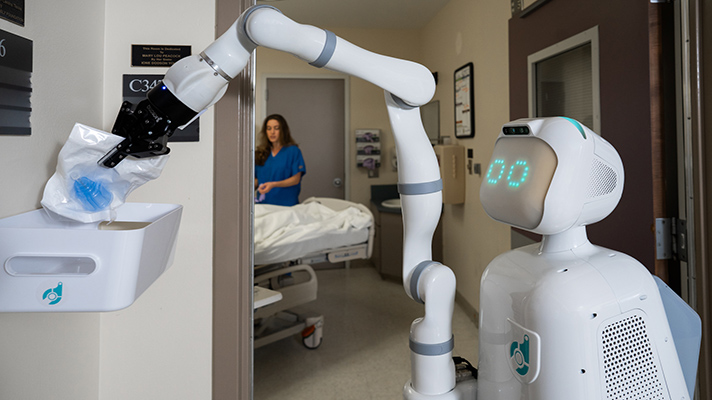
Future of Robotics in Medicine
Created on 13 January, 2026 • Tech Blog • 397 views • 12 minutes read
The future of robotics in medicine in 2026: Explore how nanobots, telesurgery, soft robotics, and neuro-integrated prosthetics are revolutionizing patient care and surgical precision.
The Precision Revolution: The Future of Robotics in Medicine in 2026
Table of Contents
The Paradigm Shift: From Mechanical Tools to Intelligent Partners
Next-Generation Surgical Platforms and Remote Intervention
Nanobots and Targeted Drug Delivery at the Cellular Level
The Rise of Autonomous Diagnostic and Triage Robots
Soft Robotics and the Future of Non-Invasive Procedures
Rehabilitative Exoskeletons and Neuro-Integrated Prosthetics
AI Orchestration: The Brain Behind the Robotic Hand
Robotic Pharmacy and Laboratory Automation
Ethical Governance and the Human-Robot Trust Gap
Conclusion: Redefining the Healing Arts
The Paradigm Shift: From Mechanical Tools to Intelligent Partners
As we navigate through 2026, the medical field is undergoing a fundamental transformation that is redefining the very nature of surgery and patient care. The future of robotics in medicine has moved beyond the era of simple mechanical assistance and has entered a phase of intelligent partnership. For years, robotic systems were seen as high-tech extensions of a surgeon’s hands, offering steadiness and magnification but requiring constant, direct manipulation. Today, we are witnessing the birth of semi-autonomous systems that can perceive the surgical environment in three dimensions, anticipate the needs of the clinical team, and execute repetitive tasks with a level of precision that exceeds human physiological limits. This shift is not about replacing the surgeon but about augmenting human capability with robotic reliability, creating a synergy that is drastically reducing recovery times and improving surgical outcomes globally.
The integration of advanced sensors and real-time haptic feedback has allowed these robots to "feel" tissue density and blood flow, providing data that was previously inaccessible to the human touch. In 2026, the robotic system is no longer just a tool; it is a data-aware participant in the operating room. This evolution is driven by the need to standardize care across different regions and to minimize the risks associated with human fatigue and tremor. As we move deeper into this decade, the distinction between "robotic surgery" and "traditional surgery" is fading, as robotics becomes the default standard for any procedure requiring high-stakes precision. We are standing at the dawn of an era where the healing arts are powered by the most sophisticated engineering the world has ever seen.
Next-Generation Surgical Platforms and Remote Intervention
In 2026, surgical robotics has achieved a level of miniaturization and dexterity that was once considered science fiction. Next-generation platforms now utilize "Single-Port" technology, allowing complex internal surgeries to be performed through a single, tiny incision. These robots deploy multi-jointed instruments that can navigate around organs with the flexibility of a serpent, minimizing trauma to surrounding healthy tissue. This has turned once-major surgeries into outpatient procedures, allowing patients to return home within hours rather than days. The economic impact of this efficiency is profound, as it frees up hospital beds and reduces the overall cost of long-term post-operative care.
Furthermore, the advent of ultra-low latency 6G networks has perfected the art of telesurgery. In 2026, a specialist surgeon in London can perform a life-saving procedure on a patient in a rural village in Southeast Asia with zero perceptible lag. The robotic console provides the surgeon with a fully immersive, 360-degree holographic view of the patient’s internal anatomy, while the remote robotic arms mimic the surgeon’s movements with micron-level accuracy. This has effectively democratized specialized medical care, ensuring that a patient’s geographic location no longer determines their access to world-class surgical expertise. Telesurgery is no longer an experimental feat; it is a vital component of the global healthcare infrastructure, bridging the gap between urban centers and underserved communities.
Nanobots and Targeted Drug Delivery at the Cellular Level
One of the most exciting frontiers of medical robotics in 2026 is the field of nanorobotics. We have successfully moved from macro-scale machines to microscopic entities that can navigate the human circulatory system. These nanobots are designed to perform targeted drug delivery, carrying potent medications directly to diseased cells while bypassing healthy ones. This is particularly revolutionary in oncology, where traditional chemotherapy often causes widespread damage to the patient’s body. Nanorobots can now identify the chemical markers of a tumor, attach themselves to the cancerous cells, and release their payload with surgical precision. This "smart delivery" system maximizes the efficacy of the treatment while virtually eliminating the debilitating side effects associated with systemic toxicity.
Beyond drug delivery, nanobots are being used for "in-vivo" diagnostic monitoring. These microscopic robots can spend months within a patient’s body, constantly scanning for early signs of infection, arterial plaque buildup, or the recurrence of disease. They transmit this data to a wearable device, which then alerts the patient’s physician to any anomalies. In 2026, we are no longer waiting for symptoms to appear before we begin treatment; we are using a robotic internal surveillance system to catch health issues at the molecular level. This transition to "molecular robotics" represents the ultimate refinement of personalized medicine, where the machine is small enough to treat the disease exactly where it starts.
The Rise of Autonomous Diagnostic and Triage Robots
The burden on emergency departments and primary care clinics has been significantly alleviated in 2026 by the introduction of autonomous diagnostic and triage robots. These systems, often deployed in hospital lobbies and community health centers, use a combination of computer vision, thermal imaging, and natural language processing to assess patients as they arrive. By scanning a patient’s vitals and listening to their description of symptoms, the robot can categorize the urgency of the case and direct the patient to the appropriate department. This ensures that critical cases are seen immediately while those with minor ailments are guided toward self-care or tele-health options, drastically improving the flow and efficiency of the healthcare system.
These robots are equipped with AI models that have been trained on billions of medical records, allowing them to spot subtle patterns that a human practitioner might miss during a busy shift. For instance, an autonomous triage robot can detect the specific vocal tremors or facial asymmetries associated with the early onset of a stroke or a cardiac event. In 2026, these machines act as a reliable first line of defense, providing a consistent and objective assessment for every patient. This has led to a significant reduction in diagnostic errors and has allowed human medical staff to focus their time and energy on complex decision-making and patient counseling, rather than the repetitive task of initial data collection.
Soft Robotics and the Future of Non-Invasive Procedures
Soft robotics has emerged as a game-changer for internal diagnostics and non-invasive procedures in 2026. Unlike the rigid metal structures of traditional robots, soft robots are constructed from highly flexible, biocompatible materials that can change shape and stiffness. This allows them to navigate the delicate and winding pathways of the gastrointestinal tract, the lungs, and the vascular system without causing the irritation or tissue damage associated with traditional endoscopes. These "bio-inspired" robots can expand, contract, and crawl through the body, carrying cameras and micro-tools to perform biopsies or clear blockages in areas that were previously unreachable without major surgery.
The applications of soft robotics extend to the development of "active" implants and prosthetics. In 2026, we are seeing the use of soft robotic sleeves that wrap around a failing heart to assist with its natural pumping action, or soft robotic sphincters that restore function to the digestive system. Because these devices mimic the mechanical properties of human tissue, the body is much less likely to reject them. This integration of soft materials with intelligent control systems is blurring the line between synthetic technology and biological life. We are creating a new generation of medical devices that feel and move like the body they are designed to heal, making the experience of internal intervention far less invasive and much more natural for the patient.
Rehabilitative Exoskeletons and Neuro-Integrated Prosthetics
For patients suffering from mobility impairments or limb loss, 2026 has brought a new era of freedom through rehabilitative exoskeletons and neuro-integrated prosthetics. Modern exoskeletons are no longer bulky, cumbersome frames; they are sleek, wearable suits that provide powered assistance to the legs and core. These devices use predictive AI to sense the user’s intended movement through muscle signals, providing just enough power to allow a person with paralysis or muscle weakness to walk, climb stairs, and perform daily tasks independently. In rehabilitation centers, these robots are used to "retrain" the nervous system, helping stroke survivors regain their natural gait through intensive, robotically-guided physical therapy.
The most profound advancements have occurred in the field of prosthetics. In 2026, robotic limbs are directly integrated with the user’s nervous system via neural interfaces. This allows the user to control the prosthetic hand or leg with their thoughts, while simultaneously receiving sensory feedback—such as pressure and temperature—directly in their brain. A person using a neuro-integrated robotic hand can now feel the difference between a piece of silk and a rough stone. This level of sensory-motor integration has transformed prosthetics from a "replacement limb" into a "restored limb," significantly improving the psychological and functional recovery of amputees. Robotics is not just restoring mobility; it is restoring the sense of touch and the feeling of wholeness.
AI Orchestration: The Brain Behind the Robotic Hand
The true power of medical robotics in 2026 lies not in the hardware, but in the AI orchestration that drives it. Every robotic movement is the result of massive amounts of data being processed in real-time. Before a surgery begins, AI models analyze the patient’s preoperative scans (CT, MRI, PET) to create a high-fidelity digital twin of the operative site. The robot then uses this map to plan the safest and most efficient path for the instruments, avoiding critical nerves and blood vessels. During the procedure, the AI continuously compares the live surgical feed with the preoperative plan, providing the surgeon with an "augmented reality" overlay that highlights the internal structures in real-time.
This AI orchestration also enables a concept known as "Collaborative Autonomy." In 2026, the surgeon acts as the high-level strategist, while the robotic AI handles the low-level execution of sutures, tissue retraction, and cauterization. If the AI detects an unexpected bleed or a deviation from the plan, it can react faster than a human, immediately stabilizing the situation and alerting the surgeon. This partnership has turned the operating room into a high-stakes "smart environment" where the risk of human error is mitigated by machine vigilance. The AI is the silent guardian that ensures every robotic movement is as safe as it is precise, turning complex surgery into a predictable and repeatable science.
Robotic Pharmacy and Laboratory Automation
The "back-end" of healthcare—pharmacies and laboratories—has been completely transformed by robotic automation in 2026. Hospital pharmacies now utilize high-speed robotic dispensing systems that can package and label thousands of personalized medications per hour with zero error. These robots are integrated with the hospital’s electronic health records, ensuring that every dose is double-checked against the patient’s allergies and current prescriptions. This has virtually eliminated the "medication errors" that were once a leading cause of patient harm. Pharmacists have been freed from the manual task of counting pills and are now focused on patient consultation and complex medication management.
In the laboratory, robotic systems are handling the massive volume of diagnostic tests required by modern medicine. From blood analysis to genomic sequencing, robots are performing the delicate tasks of pipetting, spinning, and scanning with a speed and consistency that human technicians cannot match. In 2026, a patient can have their blood drawn and receive a full metabolic and genomic profile within minutes, rather than days. This "instant diagnostics" capability allows for much faster clinical decision-making, ensuring that treatment can begin the moment a diagnosis is confirmed. The lab of 2026 is a silent, high-efficiency engine of data, where robotics ensures that the "science" of medicine is never slowed down by the "logistics" of testing.
Ethical Governance and the Human-Robot Trust Gap
As robotics becomes deeply embedded in the medical field, the ethical governance of these systems has become a top priority in 2026. The primary challenge is the "trust gap"—the psychological barrier that many patients and even some practitioners feel when a machine is making life-or-death decisions. To address this, international medical bodies have established strict "Explainability Standards," requiring that every autonomous robotic action be transparent and auditable. Patients must give informed consent not just for the surgery, but for the specific level of robotic autonomy used during the procedure. We are moving toward a framework where the human surgeon remains the "Ultimate Authority," ensuring that the machine is always a tool of human intent.
There is also the question of liability. If a semi-autonomous robot makes an error, is the fault with the surgeon, the hospital, or the software manufacturer? In 2026, this is being handled through a combination of mandatory "black box" recording in every operating room and specialized "Medical AI Insurance" pools. Furthermore, we must ensure that the "Robotic Divide" does not worsen global health inequality. As these machines are incredibly expensive, there is a risk that only the wealthiest hospitals will have access to them. The ethical mission of 2026 is to ensure that the precision of robotics is a universal right, not a luxury, through the development of low-cost, modular robotic systems designed for global deployment. Ethics is the compass that will ensure robotics leads to a fairer, safer medical future.
Conclusion: Redefining the Healing Arts
In conclusion, the future of robotics in medicine in 2026 is a testament to the power of human ingenuity to solve the most intimate of challenges: the preservation of life and health. We have moved from a world of manual intervention to a world of robotic precision, where nanobots, autonomous triage systems, and neuro-integrated limbs are no longer dreams but daily realities. This technological surge has not diminished the role of the doctor; rather, it has elevated it, allowing medical professionals to focus on the human aspects of healing—empathy, judgment, and complex problem-solving—while the machines handle the precision and the data. We are building a healthcare system that is more accurate, more accessible, and more compassionate.
As we look beyond 2026, the trajectory is clear: the boundary between the biological and the mechanical will continue to soften. We are entering an era where medicine is a predictive and proactive science, empowered by a fleet of robotic partners that work at every scale, from the hospital lobby to the microscopic level of the cell. The challenges of the future—from aging populations to emerging viruses—will be met with a robotic infrastructure that is resilient and intelligent. By designing a future where robotics serves the patient and supports the healer, we are not just changing how we treat disease; we are changing what it means to be healthy. The precision revolution is here, and it is the most hopeful chapter in the history of medicine.
References
Intuitive Surgical: intuitive.com
Mayo Clinic Robotics: mayoclinic.org/robotic-surgery
IEEE Robotics and Automation Society: ieee-ras.org
Nature Biomedical Engineering: nature.com/natbiomedeng
World Health Organization Digital Health: who.int/digital-health
Popular posts
-
How Robotics Will Transform FactoriesTech Blog • 508 views
-
Future Smartphones: What’s Coming NextTech Blog • 492 views
-
How AI Is Transforming Business in 2025Tech Blog • 480 views
-
Future of Online SecurityTech Blog • 453 views
-
Best Coding Languages for 2025Tech Blog • 449 views