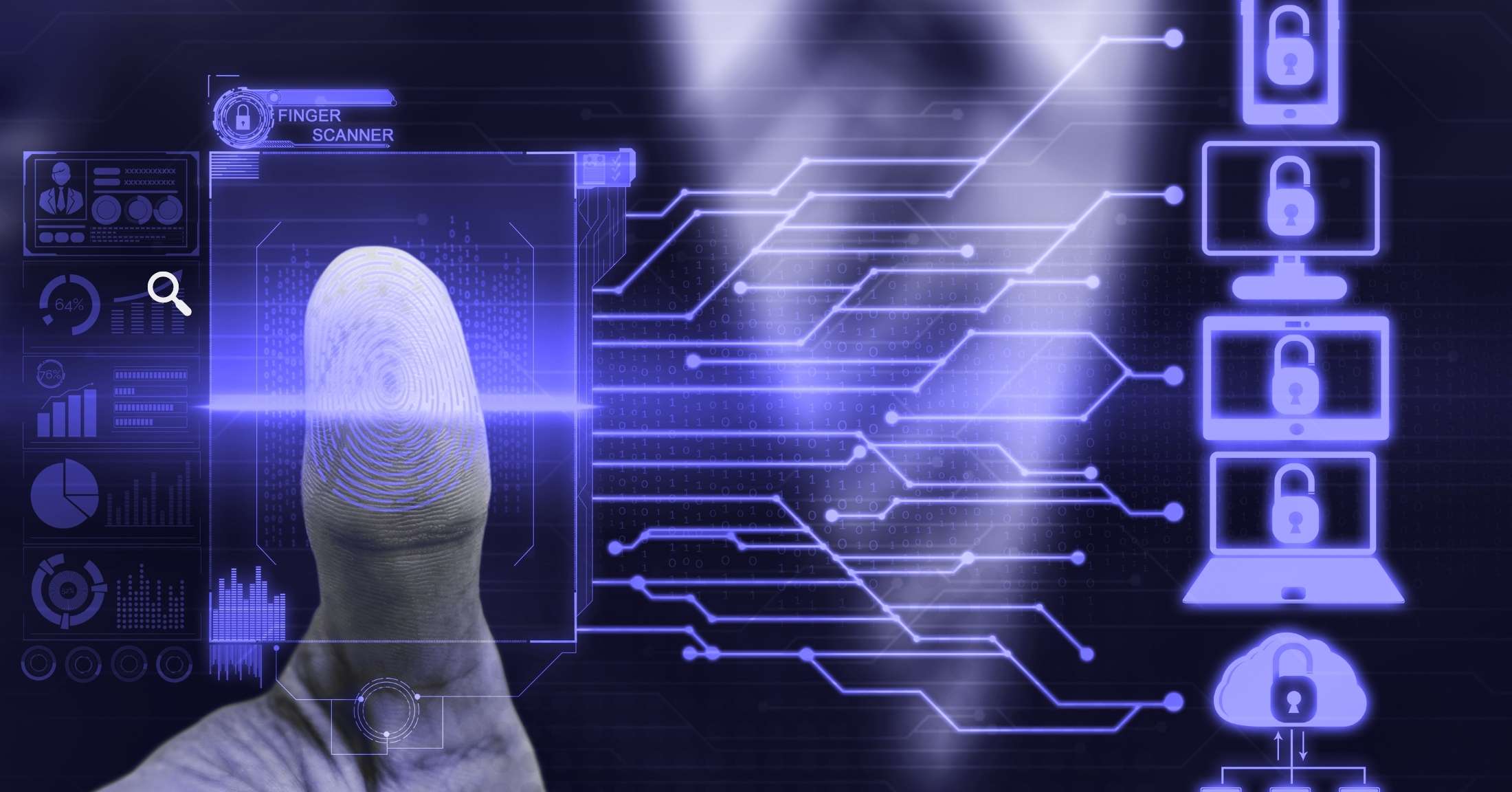
Digital Identity of the Future
Created on 29 December, 2025 • Tech Blog • 405 views • 9 minutes read
Discover the future of digital identity in 2026: From government-backed wallets and SSI to Agentic Identity (KYA) and on-device biometric security.
Digital Identity of the Future: The Era of Trust and Sovereignty in 2026
Table of Contents
- The Identity Revolution: Moving Beyond Usernames and Passwords
- Government-Backed Digital Wallets: The Global Rollout of 2026
- Self-Sovereign Identity (SSI): Reclaiming Data Ownership
- The Biometric Anchor: Differentiation in an AI-Driven World
- Agentic Identity (KYA): Verifying the Machines Among Us
- Zero-Knowledge Proofs (ZKP): Privacy by Architecture
- The End of Phishing? Passkeys and Hardware-Bound Credentials
- Decentralized Identifiers (DIDs) and Blockchain Resilience
- Post-Quantum Cryptography: Future-Proofing Our Digital DNA
- Conclusion: From Identification to Verifiable Trust
The Identity Revolution: Moving Beyond Usernames and Passwords
As we navigate through the final weeks of 2025 and look toward 2026, the concept of "Digital Identity" is undergoing its most significant transformation since the invention of the internet. For decades, our online presence was a fragmented mess of usernames, passwords, and third-party cookies—a system that was never designed for security or privacy. In 2026, we are witnessing the collapse of this legacy model. The industry is moving toward a "Decentralized Trust" paradigm, where identity is no longer something you "type in," but something you "carry" in a secure, encrypted digital wallet.
This shift is driven by the total obsolescence of traditional credentials. In a world where AI can crack standard passwords in seconds and bypass CAPTCHAs with ease, the "knowledge-based" identity model is dead. By 2026, digital identity has become a recognized pillar of global online trust, moving out of the IT department and into the center of public policy. The focus has shifted from "proving who you are" to "verifying what you are entitled to do," allowing for a more fluid and secure way to interact with services, governments, and each other without the constant risk of identity theft.
Government-Backed Digital Wallets: The Global Rollout of 2026
2026 marks the year that government-backed digital identity wallets move from experimental pilots to mainstream infrastructure. Leading this charge is the EU Digital Identity Wallet (EUDI), which is now being rolled out across all member states under the eIDAS framework. This wallet allows citizens to store digital versions of their ID cards, driver’s licenses, and educational diplomas. Crucially, by late 2026, all regulated businesses in Europe—from banks to telcos—are preparing for the 2027 mandate to accept these digital credentials as high-assurance forms of identification.
In the United States and Australia, the adoption of Mobile Driver’s Licenses (mDLs) has reached a tipping point. With the finalization of the ISO 18013-7 standard, remote mDL verification has finally become practical for everyday online use. This allows you to verify your age at a liquor store or open a bank account with a simple tap of your phone, using a cryptographically signed credential that is far more secure than a plastic card. While this rollout faces political friction and fragmentation at the state level, the convenience of a unified government wallet is proving too great for the market to ignore.
Self-Sovereign Identity (SSI): Reclaiming Data Ownership
The philosophical heart of the future identity landscape is Self-Sovereign Identity (SSI). This is the idea that you, and only you, should own and control your digital data. In 2026, the SSI market is projected to reach over $6.6 billion as organizations move away from centralized silos toward decentralized models. Instead of a social media giant or a bank "allowing" you to use your identity to log in elsewhere, SSI allows you to hold your own "Verifiable Credentials" in a wallet that doesn't depend on any single provider.
This user-centric approach solves the "Data Honeypot" problem. When identities are stored in central databases, they become prime targets for hackers. With SSI, your data is stored on your device, and you only share the specific "claims" needed for a transaction. For example, if you need to prove you are over 21 to enter a digital venue, your wallet can provide a "Proof of Age" without ever revealing your actual birthdate or name. By 2026, SSI is becoming the standard for privacy-conscious users who are tired of being the product for big tech advertisers.
The Biometric Anchor: Differentiation in an AI-Driven World
In 2026, biometrics are no longer just a convenience feature for unlocking your phone; they are the only scalable way to differentiate a real human from a sophisticated AI agent. As deepfakes become virtually indistinguishable from real video, "Liveness Detection" has become the baseline for digital identity. We are seeing a move toward "On-Device Biometrics," where your facial or fingerprint data is processed locally within a secure enclave, never leaving your hardware. This provides the security of biometrics without the privacy risk of a central biometric database.
One of the clearest shifts in 2026 is the industry's realization that traditional CAPTCHAs are useless against modern AI. In their place, biometric liveness checks—such as iris scans or 3D face mapping—have become the "Security Guard" at every digital door. This allows for "Continuous Authentication," where the system subtly monitors biometric and behavioral signals (like how you hold your phone or your typing rhythm) to ensure that the person who logged in is the same person currently using the account. In the age of AI, your unique biological signature is your most valuable digital asset.
Agentic Identity (KYA): Verifying the Machines Among Us
One of the most radical shifts in 2026 is the birth of "Know Your Agent" (KYA). As we move into an economy driven by autonomous AI agents, these "non-human identities" must also be verified and authenticated. If an AI agent attempts to negotiate a contract or make a purchase on your behalf, the recipient needs to know that the agent is legitimate, authorized by you, and operating within its defined boundaries. In 2026, AI systems are treated as formal participants in the identity lifecycle—registered, authorized, and observed just like humans.
This "Identity for Machines" prevents a new type of fraud: "Agent Spoofing." Without KYA, a malicious AI could impersonate your personal assistant to gain access to your financial records. To combat this, 2026 is seeing the rise of "Agentic Credentials," which are cryptographically bound to both the human owner and the specific AI model. This creates a chain of trust that ensures accountability in an automated world. The identity stack of the future is no longer just for people; it is the fundamental framework that allows humans and machines to interact safely in a shared digital ecosystem.
Zero-Knowledge Proofs (ZKP): Privacy by Architecture
Privacy is no longer a "design preference"; in 2026, it is an operational requirement. This is made possible by Zero-Knowledge Proofs (ZKP). ZKP is a cryptographic method that allows one party to prove to another that a statement is true without revealing any information beyond the validity of the statement itself. In e-commerce, this means you can prove you have sufficient funds for a purchase without the merchant ever seeing your bank balance or account number. In healthcare, you can prove you are vaccinated without sharing your entire medical history.
ZKP is the "Privacy Engine" of the future digital identity. It allows for "Selective Disclosure," giving users granular control over their information. By 2026, ZKP is being integrated into most major identity wallets, moving the industry toward a "Privacy-by-Architecture" model. This technology effectively ends the era of over-sharing, where we were forced to give up our entire life story just to get a library card or rent a scooter. In the future, you share only what is necessary, and not a bit more.
The End of Phishing? Passkeys and Hardware-Bound Credentials
The most common form of cybercrime—phishing—is finally being neutralized in 2026 by the widespread adoption of Passkeys. Passkeys replace the traditional password with a cryptographic key-pair that is bound to your physical device. When you log in, your device uses biometrics to unlock the private key, which then "handshakes" with the website's public key. Because there is no password to type, there is nothing for a hacker to steal via a fake login page. Even if a hacker successfully "phishes" a user into clicking a link, they cannot log in because they do not have the physical device.
By late 2026, passkeys have become the default login method for major banking, social media, and government portals. This "Passwordless" world has significantly reduced the cost of account recovery and the stress of managing dozens of complex passwords. More importantly, it has shifted the security burden from the human memory to the hardware itself. As we move toward 2027, the concept of a "forgotten password" is becoming an archaic relic of the early digital age, replaced by a seamless biometric touch that is both faster and infinitely more secure.
Decentralized Identifiers (DIDs) and Blockchain Resilience
Supporting the move toward SSI and ZKP are Decentralized Identifiers (DIDs). DIDs are a new type of identifier that enables verifiable, decentralized digital identity. Unlike a username that is owned by a company (like @yourname on X), a DID is owned by you and is stored on a distributed ledger or blockchain. This ensures that your identity is "Resilient"—it cannot be deleted, blocked, or censored by a single central authority. If one service provider goes bankrupt or decides to ban you, your DID remains intact and can be used elsewhere.
In 2026, we are seeing the rise of "Business Wallets" that use DIDs to manage corporate identities, mandates, and licenses. This streamlines B2B transactions, allowing companies to instantly verify the credentials of a potential partner or supplier without weeks of manual "Know Your Business" (KYB) checks. By anchoring identity in a decentralized ledger, we are creating a "Global Trust Fabric" that is resistant to both corporate failure and government overreach, providing a permanent and portable home for our digital selves.
Post-Quantum Cryptography: Future-Proofing Our Digital DNA
While quantum computers are not yet a daily threat in 2026, the identity industry is already moving toward Post-Quantum Cryptography (PQC). The concern is "Harvest Now, Decrypt Later"—the idea that malicious actors are currently stealing and storing encrypted identity data with the intent to crack it once quantum computers are powerful enough. To prevent this, 2026 has become the year of "Quantum Readiness," with major identity providers updating their encryption standards to be quantum-resistant.
This future-proofing is essential because our digital identity is effectively our "Digital DNA." If our identity credentials are compromised, they cannot be easily changed like a password. Ensuring that our biometric templates and decentralized identifiers are protected by PQC is a critical step in maintaining long-term digital sovereignty. As we look toward the 2030s, the security decisions made in 2026 regarding PQC will determine whether our digital identities remain private in the era of quantum supremacy. We are building the vaults today that must withstand the hammers of tomorrow.
Conclusion: From Identification to Verifiable Trust
In conclusion, the digital identity of 2026 is defined by a shift from "Identification" (simply stating who you are) to "Verifiable Trust" (cryptographically proving your attributes). Through the convergence of government wallets, self-sovereign principles, on-device biometrics, and ZKP, we are finally building an identity layer for the internet that actually works. We are moving from being passive users of platforms to being sovereign citizens of a connected world, where our privacy is protected by math and our data is owned by us.
The road ahead is not without challenges—navigating fragmentation, political debates over voter ID, and the ongoing war against AI-driven fraud will require constant vigilance. However, the benefits of a secure, portable, and private digital identity are undeniable. It is the foundation for a more inclusive digital economy, a more efficient government, and a more secure society. As we transition into this new era, the "Digital You" is finally becoming a reflection of your true self: unique, secure, and entirely under your control. The future of identity is not just digital; it is sovereign.
References
2026 Digital ID Predictions: What’s Next for the Industry? (Trinsic) |
5 Digital Identity Predictions for 2026 (Daon) |
The Identity Forecast: 5 Predictions for Building Trust in 2026 (GBG)
Popular posts
-
How Robotics Will Transform FactoriesTech Blog • 508 views
-
Future Smartphones: What’s Coming NextTech Blog • 492 views
-
How AI Is Transforming Business in 2025Tech Blog • 480 views
-
Future of Online SecurityTech Blog • 453 views
-
Best Coding Languages for 2025Tech Blog • 449 views