Best Coding Languages for 2025
Created on 15 December, 2025 • Tech Blog • 455 views • 10 minutes read
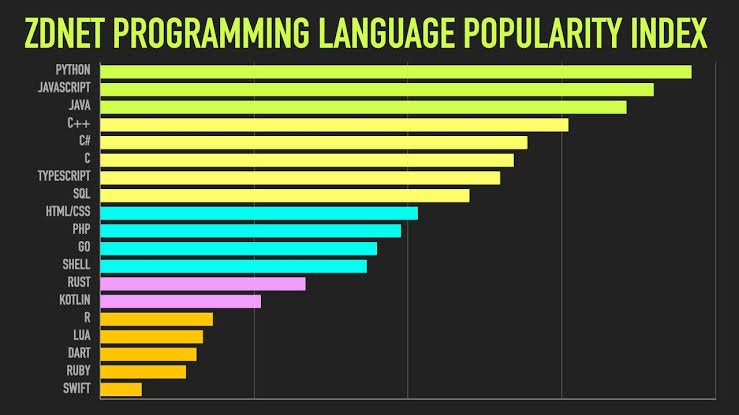
The best coding languages for 2025 are Python (AI), JavaScript/TypeScript (Web), Go/Rust (Cloud), and Java/C# (Enterprise). Find the right one for your career.
Best Coding Languages for 2025
Table of Contents
- The Dominance of Python: The Versatile Vanguard of AI and Data Science
- JavaScript and TypeScript: The Undisputed Core of Modern Web Development
- Go (Golang) and Rust: The Languages of Cloud-Native Infrastructure
- Java and C#: The Enterprise Backbone and Scalable Ecosystems
- SQL: The Essential Language for Data Interaction
- C++ and C: The High-Performance Engines of Systems and Gaming
- Kotlin and Swift: Driving the Mobile and Cross-Platform Revolution
- The Future Integration: AI Assistance and Low-Code Platforms
- Conclusion: Aligning Language Choice with Career Trajectory
The Dominance of Python: The Versatile Vanguard of AI and Data Science
As the digital landscape pivots decisively toward Artificial Intelligence (AI) and massive-scale data analytics, **Python** solidifies its position as arguably the single most important programming language for 2025 and the years to follow. Python's versatility, combined with its highly readable, English-like syntax, makes it the language of choice for tasks ranging from backend web development and automation scripting to the highly complex computational demands of machine learning and data science. Its unparalleled dominance in the AI field is directly attributable to its robust and expansive ecosystem of libraries, including industry standards like **TensorFlow, PyTorch, NumPy, and Pandas**. These libraries provide developers and data scientists with pre-built, highly optimized tools for every stage of the data pipeline, from data cleansing and analysis to model training and deployment.
The continued, explosive growth of generative AI specifically fuels the demand for Python expertise. The majority of new large language models (LLMs) and advanced AI research are prototyped, trained, and deployed using Python-based frameworks. This makes proficiency in Python not just beneficial, but absolutely necessary for anyone seeking to work in the cutting-edge fields of AI engineering, data science, and advanced robotics. Its ease of use also makes it the ideal gateway language for beginners, while its comprehensive capabilities ensure it scales effectively for production environments at major tech companies, including Google, Netflix, and Meta, where it handles high-volume tasks like recommendation engines and automation scripts. The demand for skilled Python developers remains the highest across the industry, reflecting its broad applicability and foundational role in the automation and intelligence layers of modern software.
JavaScript and TypeScript: The Undisputed Core of Modern Web Development
**JavaScript**, along with its statically typed superset **TypeScript**, remains indispensable, serving as the universal language of the internet and the foundational backbone for almost all interactive web experiences. Powering over 98% of all websites, JavaScript is mandatory for any front-end web development role, driving the most popular frameworks like **React, Angular, and Vue.js**. Its strength lies not just in client-side interaction but also in its server-side execution via Node.js, which enables full-stack development using a single language, streamlining deployment and development cycles for modern web services and microservices architectures.
However, the trend for large-scale, enterprise-level web applications is firmly shifting toward **TypeScript**. TypeScript addresses the primary drawback of native JavaScript—its lack of static typing—by adding robust type safety, which significantly improves code quality, maintainability, and scalability. This is critical for large teams working on complex codebases, allowing developers to catch errors during compilation rather than in production, leading to more reliable applications. The market demand for TypeScript developers is seeing accelerated growth as more organizations realize the long-term benefits of scalable, well-typed codebases. The combination of JavaScript's ubiquity and TypeScript's focus on enterprise-grade stability ensures that this family of languages remains a top-tier skill for any developer targeting the web, full-stack, or frontend ecosystem in 2025.
Go (Golang) and Rust: The Languages of Cloud-Native Infrastructure
The rise of microservices, containers, and cloud-native architecture—driven by tools like Docker and Kubernetes—has created a strong demand for programming languages that offer high performance, efficient concurrency, and minimal resource consumption. This niche is increasingly dominated by **Go (Golang)** and **Rust**, two languages designed to address the specific pain points of modern cloud engineering.
**Go**, developed by Google, has become the de facto standard for building fast, reliable, and highly scalable backend services and cloud infrastructure tools. Its primary strength is its exceptional built-in concurrency model (via Goroutines), which makes it highly effective for developing applications that handle thousands of simultaneous connections, such as API gateways, data pipelines, and core cloud tools. Go's simplicity, rapid compilation speed, and small memory footprint make it the perfect choice for serverless and containerized environments. **Rust**, conversely, is the language of choice for developers who prioritize maximum performance alongside absolute memory safety. Rust achieves this safety without a garbage collector, ensuring minimal performance overhead. While it has a steeper learning curve, Rust's unparalleled ability to prevent common security vulnerabilities like null pointer exceptions and buffer overflows makes it highly admired and increasingly adopted for critical systems programming, operating system components, embedded systems, and demanding WebAssembly applications. As cloud infrastructure continues to grow in complexity, the need for developers proficient in these high-efficiency, systems-level languages will only increase.
Java and C#: The Enterprise Backbone and Scalable Ecosystems
**Java** and **C#** maintain their formidable positions as the two pillars of large-scale enterprise software, cloud services, and complex, regulated industry applications. Java, with its "write once, run anywhere" philosophy powered by the Java Virtual Machine (JVM), continues to anchor the vast systems of finance, insurance, telecommunications, and high-volume data processing (via tools like Apache Kafka and Hadoop). Java’s maturity, extensive community support, and focus on cross-platform reliability make it the conservative, resilient choice for organizations where stability and security are paramount. While its verbosity has led to competition from Kotlin, its deep integration into the enterprise world ensures its lasting relevance.
**C#**, the flagship language of the Microsoft ecosystem, is similarly powerful, primarily driving development on the **.NET framework**. C# is a versatile language essential for building highly performant web APIs (using ASP.NET Core), cloud applications on Azure, and notably, the vast majority of games developed using the popular Unity game engine. The modernization of the .NET platform into a cross-platform, open-source framework has dramatically broadened C#'s appeal beyond the Windows environment. Both Java and C# offer strong object-oriented capabilities, robust library ecosystems, and a commitment to large-scale application stability, securing their place as essential skills for enterprise developers in 2025.
SQL: The Essential Language for Data Interaction
While often categorized as a declarative query language rather than a general-purpose programming language, **Structured Query Language (SQL)** remains one of the most critical and universally required skills for anyone working in technology today. As the language used to manage, manipulate, and query relational databases (like PostgreSQL, MySQL, and SQL Server), SQL is the lingua franca of structured data. Every backend developer, data analyst, data scientist, and business intelligence professional must have a strong command of SQL to efficiently retrieve, filter, aggregate, and join the massive datasets that power modern business operations.
The cloud computing revolution has only solidified SQL's importance. Modern cloud data warehouses and analytical databases, such as AWS Redshift, Google BigQuery, and Snowflake, use highly optimized, distributed SQL engines to handle petabytes of data, often combining structured relational data with unstructured sources. The ability to write clean, efficient, and complex SQL queries is a direct determinant of productivity in data-intensive roles. Consequently, regardless of the chosen application development language—be it Python, Java, or JavaScript—SQL proficiency is an indispensable tool that forms a fundamental layer of the modern tech stack, bridging application logic with persistent data storage.
C++ and C: The High-Performance Engines of Systems and Gaming
The low-level power and uncompromised performance offered by **C** and **C++** ensure their continued relevance in domains where every clock cycle and byte of memory matters. These languages are the foundation of systems programming, powering operating systems kernels, high-performance computing, embedded systems, and the overwhelming majority of commercial game engines. **C** provides direct, low-level hardware control, making it essential for writing device drivers and operating system components. **C++** builds upon this foundation by adding powerful object-oriented features, making it the industry standard for developing demanding applications like high-frequency trading platforms, complex 3D graphics engines, and real-time simulations.
In the context of the 2025 landscape, C++ is experiencing a resurgence in specialized areas, particularly in AI inference and robotics. While Python is used for high-level model training, C++ is often utilized to optimize the performance-critical portions of AI models for faster execution on production hardware, especially in edge computing scenarios. Its unparalleled speed and efficiency make it non-negotiable for tasks requiring real-time processing and minimal latency. Proficiency in C/C++ often represents a deep understanding of computer architecture and memory management, making it a valuable skill set for specialized, high-impact engineering roles.
Kotlin and Swift: Driving the Mobile and Cross-Platform Revolution
The mobile application economy continues its massive global expansion, making dedicated mobile languages vital for developers. **Kotlin** and **Swift** stand out as the definitive modern languages for mobile application development on their respective platforms, and their influence is expanding into backend services.
**Kotlin** has become the officially endorsed and preferred language for **Android development**, largely replacing Java in new projects. Kotlin is loved for its concise, expressive syntax, which significantly reduces boilerplate code, improving developer productivity and code maintainability. Crucially, it offers seamless **interoperability with Java**, allowing enterprises to incrementally modernize their vast existing Java codebases. Its efficiency and modern design have also seen it adopted for server-side development, making it a valuable full-stack asset. Similarly, **Swift** is the modern, secure, and fast language designed by Apple for building native applications across the entire Apple ecosystem, including iOS, iPadOS, macOS, and watchOS. Swift’s focus on safety, performance, and clear syntax makes it the mandatory skill for developers targeting the lucrative Apple hardware market. Both languages epitomize the industry shift toward safer, more expressive, and more productive programming paradigms in the mobile-first world.
The Future Integration: AI Assistance and Low-Code Platforms
While the demand for the core programming languages remains strong, the way developers interact with code is rapidly changing due to the integration of Artificial Intelligence and the rise of low-code/no-code platforms. AI-powered coding assistants, such as GitHub Copilot and similar large language model tools, are fundamentally transforming the developer workflow. These tools accelerate development by automatically generating code snippets, translating between languages, and catching errors, thereby increasing overall productivity. This does not eliminate the need for skilled programmers, but it shifts the focus: the essential skill becomes the ability to expertly debug, integrate, and logically govern the AI-generated code, demanding a deeper understanding of software architecture and problem-solving.
Concurrently, **Low-Code/No-Code (LCNC)** platforms are democratizing software creation, allowing non-technical domain experts to quickly build custom applications using visual drag-and-drop interfaces. While LCNC platforms handle simple, standardized tasks, they ultimately rely on the stability and extensibility provided by professionally coded systems written in languages like Java, C#, and Python. The trend is toward a hybrid environment where professional developers utilize their core language skills to build the complex, highly customized core features and APIs, which are then exposed and extended via LCNC tools to a broader audience. Therefore, the best coding languages for 2025 are those that are most critical for building the foundational infrastructure that powers both the AI tools and the LCNC platforms themselves.
Conclusion: Aligning Language Choice with Career Trajectory
Choosing the "best" coding language for 2025 depends less on a universal ranking and more on the specific career trajectory an individual wishes to pursue. For those aiming for the most explosive growth areas—AI, machine learning, and data science—mastering **Python** is non-negotiable. For developers focused on the most pervasive platform—the web—a deep expertise in **JavaScript** and the scalability of **TypeScript** is required. Meanwhile, engineers targeting high-performance cloud infrastructure and DevOps must embrace the efficiency and concurrency of **Go** and the safety of **Rust**. The consistent demand for **Java** and **C#** proves their enduring value as the safe, scalable choices for enterprise roles, while **SQL** remains the universal language of data manipulation. Ultimately, the most successful professionals in 2025 will be those who not only master one of these core languages but also cultivate the secondary skills—such as cloud architecture, secure coding practices, and the ability to work effectively with AI tools—that translate foundational language skills into high-impact business solutions across the entire technological spectrum.
References
Top Programming Languages to Learn |
Most In-demand Coding Languages |
Key Languages for AI and Cloud
Popular posts
-
How Robotics Will Transform FactoriesTech Blog • 508 views
-
Future Smartphones: What’s Coming NextTech Blog • 492 views
-
How AI Is Transforming Business in 2025Tech Blog • 480 views
-
Future of Online SecurityTech Blog • 453 views
-
Best Coding Languages for 2025Tech Blog • 449 views