AI in Retail: What’s Next
Created on 10 January, 2026 • Tech Blog • 356 views • 9 minutes read
Explore the future of AI in retail for 2026: Agentic commerce, hyper-personalization, phygital shopping, and autonomous supply chain orchestration.
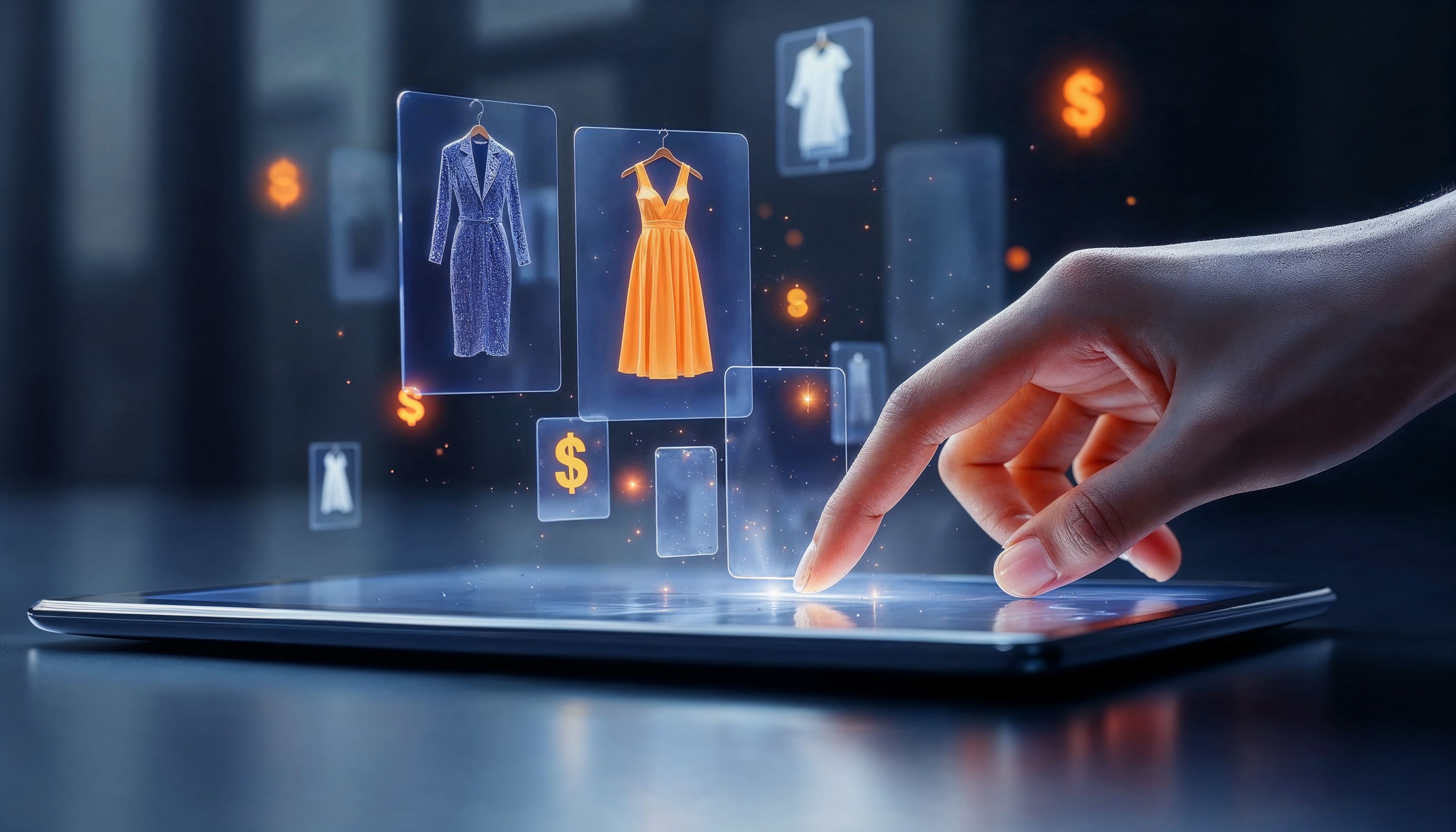
AI in Retail: What’s Next? The 2026 Shift Toward Agentic Commerce
Table of Contents
- The 2026 Retail Landscape: From Experimentation to Autonomy
- Agentic Commerce: When AI Becomes the Shopper
- Hyper-Personalization 2.0: Predictive Emotional Intelligence
- Phygital Convergence: The Intelligent Storefront
- Generative AI in Supply Chains: Solving Inefficiency at the Edge
- Dynamic Pricing and Real-Time Competitive Intelligence
- Virtual Influencers and Social Commerce Orchestration
- The Ethics of Influence: Data Sovereignty and Trust
- Future-Proofing Infrastructure: The Edge Computing Mandate
- Conclusion: Redefining the Value of the Human Touch
The 2026 Retail Landscape: From Experimentation to Autonomy
As we navigate early 2026, the global retail sector has moved past the "AI-curiosity" phase of the early 2020s and into an era of deep, autonomous execution. In previous years, AI was largely a backend tool for demand forecasting or a frontend gimmick for simple chatbots. In 2026, AI has become the "connective tissue" of the industry. Retailers are no longer just asking "What can AI do?" but are instead building "AI-Native" operating models where intelligence is embedded in every shelf, every pixel, and every shipment. This shift is driven by a critical need for margin protection in a volatile global economy.
Recent data from the National Retail Federation (NRF) and Microsoft suggests that over 90% of leading retailers have increased their AI budgets for 2026. The goal is "Pragmatic AI"—deploying systems that deliver measurable ROI by reducing waste and friction. We are seeing a move away from fragmented workflows toward a unified, intelligence-driven operating system. In 2026, the winning retailers are those that use AI not as an add-on, but as the foundational architect of the entire customer journey, from initial inspiration to the final mile of delivery.
Agentic Commerce: When AI Becomes the Shopper
The most disruptive trend of 2026 is the rise of Agentic Commerce. We are moving from a world where humans browse and buy to a world where "AI-gents" (personal AI agents) browse and buy on behalf of the consumer. These agents live within browsers, smart devices, and specialized "super-apps," using their knowledge of a user's budget, style preferences, and even their calendar to make proactive purchasing decisions. Instead of a human spending hours comparing grocery prices or looking for the perfect gift, their AI agent identifies the best value and completes the transaction autonomously.
This shift forces retailers to rethink their entire digital strategy. In 2026, SEO is no longer just about appealing to human eyes; it's about being "Agent-Friendly." Brands are building specialized data feeds that allow these autonomous agents to "read" product benefits, stock levels, and sustainability ratings in milliseconds. This era of "Zero-Click Commerce" means that retailers must compete on trust and data transparency. If an agent can verify that a brand's supply chain is ethical and its pricing is fair, it will win the sale—often before the human customer even realizes they had a need.
Hyper-Personalization 2.0: Predictive Emotional Intelligence
Personalization in 2026 has evolved from "People who bought this also liked..." into Predictive Emotional Intelligence. Modern AI models now synthesize signals from social media trends, local weather patterns, biometric data (with consent), and real-time browsing context to understand the *why* behind a purchase. If a customer is browsing for athletic gear on a rainy Tuesday morning after a poor night's sleep (detected via wearable data), the AI might suggest recovery-focused equipment or comfort-first apparel rather than high-intensity performance gear.
This level of hyper-personalization extends into "Generative Product Discovery." Instead of showing a static catalog, AI-powered storefronts generate personalized lookbooks on the fly, featuring synthetic models that match the shopper's body shape, ethnicity, and style vibe. This "Virtual Dressing Room" experience has drastically reduced return rates, which were a major drain on retail margins in the early 2020s. In 2026, the shop doesn't just know what you bought last year; it understands who you are today and what you'll need tomorrow.
Phygital Convergence: The Intelligent Storefront
In 2026, the boundary between physical and digital shopping has effectively vanished—a concept known as Phygital Convergence. Physical stores have transformed into immersive "Experiential Destinations" rather than just warehouses for stock. In-store cameras equipped with "Vision AI" now perform real-time heat mapping and sentiment analysis, allowing store managers to reassign staff or trigger digital promotions based on where crowds are gathering. Smart mirrors in dressing rooms act as personal stylists, suggesting matching accessories and allowing for instant, "cashierless" checkout through biometric verification.
This intelligence makes the physical store as measurable as a website. Retailers can now track "dwell time" at a specific end-cap display or see which items were picked up but ultimately put back. This data is fed directly into the supply chain, ensuring that local stores are stocked with the exact items the neighborhood wants. By 2026, "Just-Walk-Out" technology has moved from pilot programs into mainstream retail, turning a trip to the store into a frictionless event where the technology fades into the background, leaving only the experience of the brand.
Generative AI in Supply Chains: Solving Inefficiency at the Edge
While customer-facing AI gets the headlines, the most significant ROI in 2026 is coming from Supply Chain Autonomy. Generative AI is now used to solve the "last-mile" problem by dynamically rerouting shipments in response to real-time traffic, weather, or port congestion. Predictive forecasting models have become so accurate that they can reduce inventory errors by up to 50%, virtually eliminating the "out-of-stock" frustrations that previously plagued both retailers and consumers. This is "AI at the Edge," where decisions are made locally at the warehouse or delivery drone level.
Furthermore, AI is now handling "Vendor Orchestration." Autonomous agents can negotiate with multiple suppliers simultaneously, optimizing for cost, speed, and carbon footprint. This allows for a "Resilient Supply Chain" that can pivot instantly if a geopolitical event disrupts a primary trade route. In 2026, the retail supply chain is no longer a linear pipe; it is a self-healing, multi-nodal network that operates with surgical precision. This backend efficiency is what allows retailers to offer lower prices and faster delivery while still maintaining healthy margins.
Dynamic Pricing and Real-Time Competitive Intelligence
Pricing in 2026 is no longer a static number on a tag; it is a Dynamic Variable managed by AI in real-time. Sophisticated algorithms now scan thousands of data points—competitor pricing, current demand, inventory levels, and even the time of day—to adjust prices on the fly. This "Price Elasticity Modeling" ensures that retailers remain competitive while maximizing profit margins. For the consumer, this often results in more personalized loyalty discounts and urgency-driven offers that make sense for their specific budget.
This trend is supported by "Competitive Intelligence" agents that act as digital spies, constantly monitoring the global marketplace for shifts in consumer sentiment or new product launches. If a "dupe" or a private-label alternative starts trending on social media, the retailer’s AI can flag the threat and suggest a counter-strategy—such as a promotional campaign or a product redesign—within hours. In 2026, the battle for the "Wallet Share" is won by the retailer with the fastest data-to-decision loop.
Virtual Influencers and Social Commerce Orchestration
Social commerce has reached its zenith in 2026, largely driven by Virtual Influencers. These AI-generated personalities work 24/7, hosting livestreams, responding to thousands of comments in seconds, and driving "hot" new trends across platforms like TikTok and Instagram. Unlike human influencers, these virtual avatars are perfectly aligned with brand values and can be "personalized" to different regions and demographics instantly. They aren't just faces; they are integrated nodes in the "Agentic Payment" ecosystem, allowing for instant purchase within the social feed.
Retailers are now using AI to orchestrate "Live Commerce" events where the inventory levels and pricing change dynamically based on the number of viewers and the level of engagement. This "Gamified Shopping" experience turns a simple purchase into a social event, boosting brand loyalty among Gen Z and Gen Alpha consumers. By 2026, the most successful brands are those that have mastered the art of "Algorithmic Storytelling," using AI to create authentic-feeling narratives that lead seamlessly to a transaction.
The Ethics of Influence: Data Sovereignty and Trust
With great data comes great responsibility, and 2026 is a watershed year for Retail Ethics. As AI agents gain the power to check bank accounts and negotiate prices, "Data Sovereignty" has become a central consumer demand. Regulations like the EU’s AI Act and the UK’s Data Privacy frameworks now mandate that retailers provide total transparency into how their algorithms make decisions. "Black-box AI" is being replaced by "Explainable AI," where a shopper can ask, "Why was I shown this price?" and receive a clear, honest answer.
Trust is the new currency. In 2026, the most successful retailers are those that allow users to own and move their "Shopping Persona" across different platforms. This "Identity Portability" prevents consumers from being locked into a single ecosystem and ensures that their data is used to serve them, not just exploit them. Brands are hiring "Chief Trust Officers" to oversee the ethical deployment of AI agents, ensuring that the technology promotes inclusivity and accessibility rather than entrenching bias. In 2026, you don't just win on price; you win on integrity.
Future-Proofing Infrastructure: The Edge Computing Mandate
The technical backbone of retail in 2026 has shifted to Cisco-grade Unified Edge. Because AI-driven tasks—like real-time video analytics or generative response—require massive processing power, retailers are moving away from traditional cloud setups to "Edge Compute" located right inside the store or warehouse. This reduces latency to near-zero, ensuring that a "smart shelf" can update its display the moment a customer looks at it. This "Zero-Touch" infrastructure is designed to be scalable, secure, and resilient against the increasingly smart cyberattacks of the mid-2020s.
Infrastructure in 2026 is "Security-Fused." With thousands of IoT devices and AI agents active in every store, the "Attack Surface" has grown exponentially. Retailers are utilizing AI-driven security platforms that can spot and neutralize a threat in milliseconds, long before it can impact customer data. This "Intelligent Edge" is what makes the frictionless, autonomous world of 2026 possible. Without a flexible and secure foundation, the most advanced AI features would simply be too slow or too risky to deploy at scale.
Conclusion: Redefining the Value of the Human Touch
In conclusion, the future of AI in retail in 2026 is a move toward Seamless Intelligence. We are building an ecosystem where machines handle the drudgery of logistics, pricing, and search, allowing the human elements of the business—strategy, creativity, and empathy—to shine. While "AI-gents" might handle the transaction, only humans can build the brand stories that give products their meaning. The "Retail Revolution" of 2026 is not about replacing people with robots; it is about using technology to remove every barrier between a person's intent and their satisfaction.
As we look forward, the retailers that thrive will be those that embrace "Integration over Experimentation." The era of "pilot projects" is over; the era of the "Intelligence-Driven Enterprise" has begun. By mastering the balance between agentic automation and human-centric design, brands can create a future that is not only more efficient but also more personal, more ethical, and more resilient. The future of retail is autonomous, it is phygital, and it is finally ready for its close-up. The journey has just begun.
References
AI in Retail 2026: 10 Trends Shaping the Future (Insider One) |
Microsoft Propels Retail Forward with Agentic AI (Microsoft Source) |
10 Trends and Predictions for Retail in 2026 (National Retail Federation) |
NVIDIA State of AI in Retail Survey 2026 (NVIDIA Blog) |
IBM-NRF Study: AI Shapes Consumer Decisions (IBM Newsroom)
Popular posts
-
How Robotics Will Transform FactoriesTech Blog • 508 views
-
Future Smartphones: What’s Coming NextTech Blog • 492 views
-
How AI Is Transforming Business in 2025Tech Blog • 480 views
-
Future of Online SecurityTech Blog • 453 views
-
Best Coding Languages for 2025Tech Blog • 449 views